


Whether you’re installing a new ventilation system in a domestic renovation or upgrading ductwork in a commercial setting, choosing the right ducting fittings is absolutely crucial. In this comprehensive guide, we break down everything you need to know about duct fittings in the UK, covering the different types, how to install them correctly, and which products will deliver long-lasting performance and compliance.
At Fresh Air Supplies, we’ve spent over 35 years working on both sides of the trade, supplying and installing. That means we know how important it is for contractors and competent DIYers alike to source quality fittings that won’t let them down on site. From circular duct fittings to the sleek new Rondo air valves, we stock everything you need for an airtight, efficient system.
What Are Ducting Fittings and Why Do They Matter?
Ducting fittings are the connectors, bends, tees, reducers, and adaptors that join sections of ductwork together. They’re essential to ensure that air moves efficiently through your ventilation system with minimal resistance or leakage.
In the UK, the performance of your ductwork hinges on two main factors:
- Airtightness – Reducing leakage to maintain system pressure and efficiency.
- Compliance – Meeting standards such as DW144 and Part F of the Building Regulations.
Poorly chosen or incorrectly installed fittings lead to pressure drops, increased energy use, and potentially failing building inspections. That’s why it’s vital to choose the right air duct fittings from the start.
Efficient ductwork means your system operates more quietly, requires less maintenance, and uses less energy. For domestic environments, this can mean better indoor air quality and comfort. In commercial settings, compliance with regulations and energy efficiency targets is often a legal requirement.
Types of Ducting Fittings Used in the UK
There are several types of ducting fittings UK professionals rely on. Here’s a breakdown:
1. Circular Duct Fittings
These are the most common in domestic and light commercial systems, thanks to their efficient airflow characteristics. Key circular fittings include:
- Bends/elbows – for changing direction.
- Reducers – for connecting different diameter ducts.
- Tees/Y-pieces – for branch connections.
- End caps and plugs – to seal unused ports.
Circular fittings are often used with spiral ducting, which we manufacture and stock in-house at Fresh Air Supplies. They’re ideal for longer duct runs and offer lower pressure loss than rectangular systems.
2. Flexible Duct Fittings
These are used where space is tight or vibration needs to be isolated. While flexible ducting should be used sparingly (to minimise resistance), it’s essential for connections to fans, grilles, and diffusers.
We stock four types of flexible ducting in all sizes, along with compatible connectors and fasteners. Each is made with durability and ease of installation in mind whether you’re working in a loft conversion or a tight commercial ceiling void.
3. Rectangular/Square Duct Fittings
More common in commercial and industrial installations. These fittings include:
- Flanged connections
- Tapered reducers
- Access panels
These fittings often require bespoke fabrication. At Fresh Air Supplies, we can manufacture made-to-measure square and rectangular duct fittings to meet any project need.
4. Specialist and Bespoke Fittings
Sometimes, off-the-shelf solutions won’t cut it. That’s where custom-fabricated duct fittings come in. Whether it’s a commercial kitchen canopy outlet, a transition box, or a complex manifold, we can fabricate bespoke items to your spec.
Our fabrication team has produced fittings for everything from large commercial kitchens to small plant rooms in heritage buildings, ensuring perfect fit and performance every time.
Choosing the Right Duct Fittings for Your Project
When planning your ventilation system, it’s also worth considering which fan units and brands you’ll be pairing your ductwork with. Fresh Air Supplies stock and support a wide range of fan units compatible with our ducting fittings, including trusted manufacturers like Woods, Soler & Palau (S&P), Vent-Axia, and Vortice.
Whether you’re specifying an inline extract for a kitchen, a low-noise MVHR unit for a bedroom, or a commercial fan for a restaurant canopy, we can advise on duct compatibility and performance integration.
When selecting duct fittings, consider the following:
- Air volume and pressure – Spiral and circular systems are more efficient at maintaining pressure.
- Space constraints – Flexible ducting and tight-radius bends may be needed in confined areas.
- Noise control – Smooth transitions and sealed joints reduce noise.
- Aesthetic finish – Especially in exposed ceilings or designer homes.
- Budget vs long-term performance – Galvanised steel fittings last longer and are compliant with DW144.
Also factor in local climate, building use, and ventilation goals. For example, a high-humidity environment like a gym may require special attention to material corrosion resistance and sealing integrity.
If you’re unsure, our sales team is on hand to provide expert guidance. With decades of experience, we help installers make informed choices that keep their projects compliant and efficient.
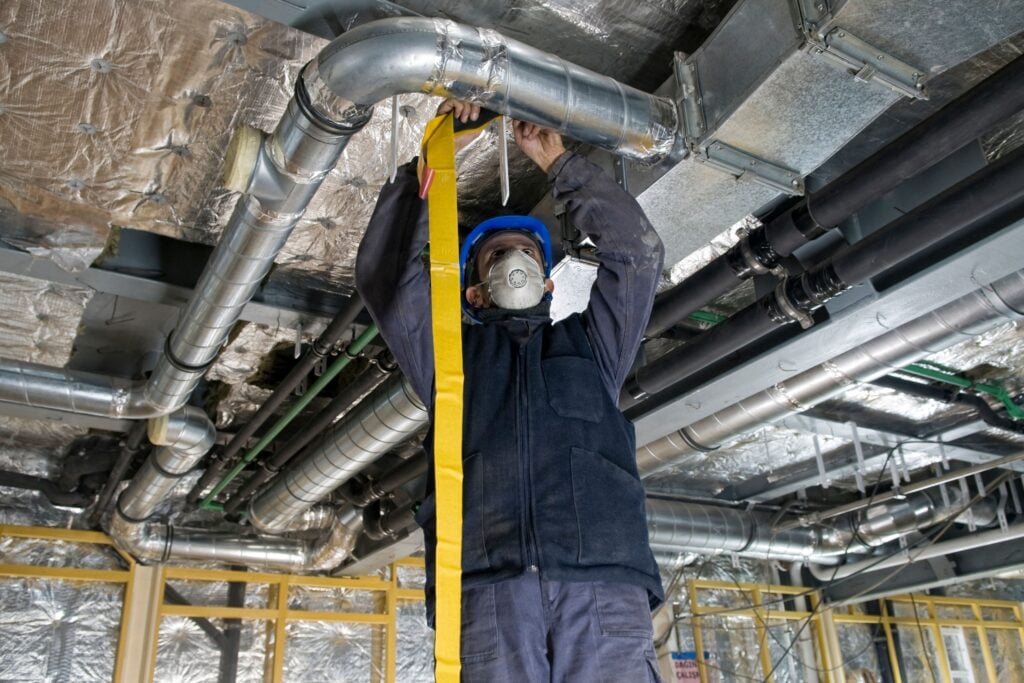
How to Install Air Duct Fittings Correctly
Even the best duct fittings will underperform if installed poorly. Here are some top installation tips:
1. Plan Your Layout in Advance
Sketch out your duct routes, calculate equivalent lengths for bends and fittings, and ensure all transitions are smooth. Poor planning often leads to unnecessary fittings, airflow disruption, and extra cost.
2. Use the Right Connectors
We recommend gasketed fittings or applying appropriate duct sealant. Don’t rely on tape alone. Invest in metal band clamps, flexible couplings, and access doors where needed.
3. Support Your Ductwork Properly
Avoid sagging or stress at fittings. Use hangers, brackets, and saddles to secure runs every 1.2–1.8 metres. A poorly supported system can compromise airflow and create noise issues.
4. Check for Leaks
Use smoke pencils or airflow testers to verify airtightness, especially at tees and bends. Airtight systems are more efficient and reduce the risk of drawing in dust or pollutants.
5. Insulate if Required
Where condensation or temperature control is an issue, insulate your fittings and ductwork. This is essential in HVAC systems that carry chilled or heated air, especially in unconditioned spaces.
6. Test Airflow and Adjust Dampers
Once your system is installed, test each branch for airflow. Balance dampers accordingly and adjust diffuser settings. If airflow is uneven, review fitting placement and sizing.
7. Allow for Maintenance Access
Every system will eventually require inspection or cleaning. Include access panels or removable fittings in your layout.
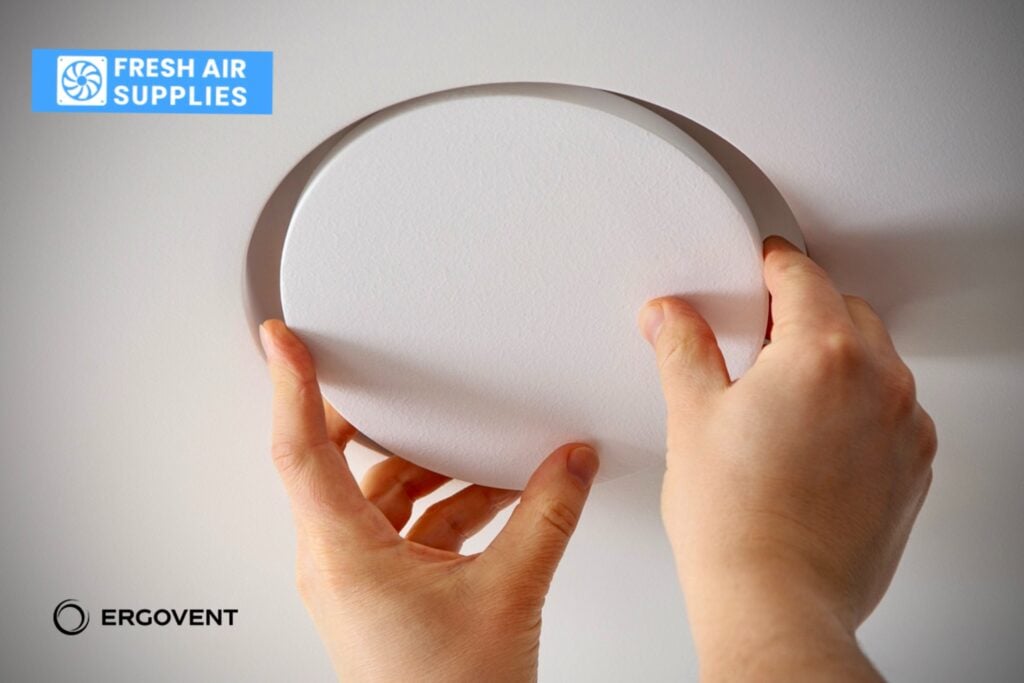
Spotlight: Rondo Air Valves – The Designer’s Choice
If you’re after a discreet, modern finish, Rondo air valves are an unbeatable option. These innovative ceiling air diffusers are designed to sit flush and invisible within plasterboard ceilings.
We supply the Ergovent Rondo, hugely popular among architects, interior designers, and high-end residential developers. Here’s why:
- Minimalist, edge-free appearance
- Easy to install and remove for cleaning
- Compatible with rigid and flexible ducting
- Excellent airflow performance
Whether you’re replacing a traditional valve or starting from scratch, Rondo valves are the smart choice for a contemporary space. They’re ideal for use in kitchens, bathrooms, bedrooms, and open-plan areas where clean lines are essential.
Their ease of installation and compatibility with various duct types make them a popular retrofit option as well.
Avoiding Common Mistakes With Ducting Fittings
We often get called in to troubleshoot poor installs. Here are the most frequent issues we see:
- Using too many flexible fittings – They increase resistance and sag over time.
- Incorrect reducer sizing – Causes pressure imbalances.
- Inadequate sealing – Leads to costly air leaks.
- Unsupported ductwork – Causes stress at fittings and eventual failure.
- Ignoring access for maintenance – Always allow for cleaning and inspection ports.
- Mismatched materials – Using incompatible metals can lead to corrosion over time.
- Poor placement of grilles and diffusers – Results in poor airflow distribution and uncomfortable indoor conditions.
- Under-sizing ducts and fittings – Reduces system efficiency and increases noise.
Avoiding these mistakes starts with using trusted suppliers and quality fittings, like the ones we stock at Fresh Air Supplies.
Fresh Air Supplies: Your Trusted Source for Ducting Fittings UK
With a full range of ducting fittings in stock, from circular duct fittings and flexible options to advanced air valves like the Rondo, we’re ready to support your next project, whether it’s a domestic job or a full-scale commercial install.
We offer:
- High stock levels
- Fast nationwide delivery
- Expert advice from real industry veterans
- Competitive prices on trade-quality products
- Bespoke fabrication for custom needs
Whether you’re specifying a premium kitchen extract fan from Woods, a compact inline fan from Soler & Palau (S&P), or a trusted residential unit from Vent-Axia or Vortice, the quality of your ducting fittings will have a direct impact on system performance. Mismatched or poor-quality fittings can undermine even the best fans. That’s why sourcing all components, from fans to fittings, from a knowledgeable supplier like Fresh Air Supplies is a smart move.
Our partnership with COANDA also gives you access to MADEL’s premium diffusers, grilles, and air volume control products, all backed by top-tier technical support. That means better control, better performance, and fewer callbacks on your projects.
The right air duct fittings can make or break your ventilation system. Whether you’re a seasoned installer or tackling your first ductwork project, investing in proper planning, quality components, and correct installation will pay off in efficiency, noise reduction, and long-term reliability.
At Fresh Air Supplies, we make it easy to get it right the first time. Our extensive product range, decades of experience, and commitment to service mean we’re not just a supplier, we’re a partner in your success.
Ready to order?
Call our team on 02886752336 or email us at sales@freshairsupplies.co.uk for expert advice and fast, dependable service. Discover why more UK installers are choosing Fresh Air Supplies for their ducting fittings.
This guide includes key insights based on UK Building Regulations and industry standards such as DW144. Always consult with local building control and refer to manufacturer data sheets when in doubt.