

If there is one thing that can ruin an otherwise well-designed ventilation system, it is noise.
You can have the correct fan, the right airflow rates, tidy duct runs, and a neat installation throughout, but if the system is noisy once it is switched on, that is what the customer will remember. A low hum in the bedroom, a constant whooshing sound over a kitchen ceiling, or sound travelling between rooms through the ductwork can quickly turn into a callback.
That is exactly why attenuators matter.
They are not just an optional extra added at the end of a job. In many systems, they are a vital part of getting the installation right from the outset. When they are positioned properly, attenuators help reduce fan noise, cut down duct-borne sound, and improve comfort throughout the property. When they are positioned badly, even a good-quality system can still sound poor.
So, where should attenuators actually be installed in a ductwork system?
The honest answer is that there is no single placement that works for every project. It depends on where the noise is coming from, how the ductwork is laid out, and which rooms need the most protection from sound. That said, there are clear best-practice principles that every installer and specifier should follow.
In this guide, we will walk through where attenuators should be fitted, why their position matters so much, and the common mistakes that can leave a system noisier than it needs to be.
What Do Attenuators Do In A Ductwork System?
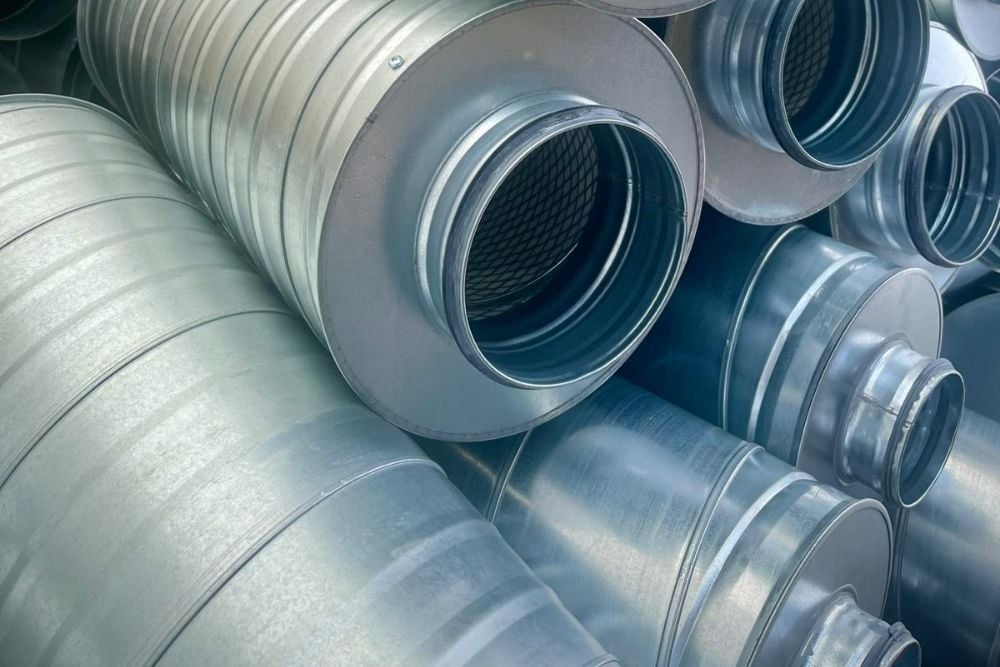
An attenuator, sometimes referred to as a silencer, is used to reduce noise travelling through ventilation ductwork.
In most systems, that noise comes from one of three places.
Fan Noise
This is the sound generated by the fan or ventilation unit itself. It can travel along the supply ductwork, back through the extract side, or both.
Air Movement Noise
This is caused by air travelling too fast through the system, passing through undersized ductwork, or hitting abrupt bends, dampers, ventilation grilles, and terminals.
Cross Talk Between Rooms
This happens when sound travels from one room to another through a shared duct system. It is particularly noticeable in bedrooms, offices, apartments, and other spaces where privacy and comfort matter.
Attenuators help reduce these problems by interrupting the path that sound takes through the ductwork. They are especially useful in systems where low-noise performance is important, such as MVHR installations, residential ventilation, and commercial projects where occupants are sensitive to background noise.
Why Placement Matters So Much
One of the most common mistakes we see is treating attenuators as a last-minute fix.
The system is installed, it gets switched on, the noise is higher than expected, and then somebody decides to squeeze an attenuator into whatever gap is available in the ceiling void. Sometimes that helps a little. Often, it does not help enough.
That is because attenuators work best when they are fitted in the right location from the beginning. The aim is to stop noise before it has a clear path through the rest of the system.
As a rule, attenuators should be installed as close as practical to the noise source, while still allowing for proper duct layout, support, and access.
In practical terms, that often means fitting them:
- Near fans or ventilation units
- On the supply and extract sides of MVHR units
- Before terminals serving noise-sensitive rooms
- On branches where room-to-room cross talk could be an issue
- In long duct runs that could carry sound directly into occupied spaces
The right answer always comes back to one thing: understanding where the sound is coming from and where it is likely to travel.
Installing Attenuators Near The Fan
In many systems, the main source of noise is the fan itself.
That might be an inline fan, a centrifugal box fan, a commercial extract fan, or a complete MVHR unit. Wherever the fan is creating the majority of the noise, the first attenuator should usually be fitted close to it.
On the supply side, that often means placing the attenuator just after the fan, so the sound is reduced before it travels through the duct and out into the occupied space.
On the extract side, it may mean placing the attenuator before the fan, particularly where the goal is to reduce noise travelling back towards the room. In some systems, particularly larger or more demanding ones, attenuation may be needed on both sides.
This is one of the simplest and most effective ways to improve acoustic performance. If the fan is the biggest noise source, it makes sense to tackle that noise as early as possible.
A common site mistake is positioning the attenuator several metres away simply because there is more room there. The problem with that approach is that the noise has already entered a much longer section of the system before it is controlled.
Attenuators On MVHR Systems
In domestic ventilation, attenuator placement is especially important on MVHR systems.
These systems are designed to provide continuous ventilation while keeping the home comfortable and energy efficient. But even with a quality MVHR unit, poor acoustic design can still lead to complaints. Bedrooms are usually where this shows up first. A unit that sounds acceptable in the loft or utility area can still produce a noticeable hum or hiss at the supply valve once that sound has travelled through the ductwork.
That is why attenuators are commonly installed on both the supply and extract sides of the MVHR unit.
A typical layout might include:
- One attenuator on the supply air leaving the unit
- One attenuator on the extract air returning to the unit
In some properties, that may be enough. In others, especially where bedroom branches are short or the layout is more compact, additional attenuation may be needed closer to the room itself.
This is where experience really counts. On paper, the airflow figures may all look fine. In practice, the final acoustic result depends on the full system layout, including duct size, routing, bends, terminals, and branch design.
Installing Attenuators Before Noise-Sensitive Rooms
Not every room in a building has the same acoustic priority.
A WC extract point is not judged in the same way as a main bedroom supply valve. A utility room can tolerate a lot more background noise than a home office. A meeting room in a commercial building needs more acoustic protection than a storeroom.
That is why attenuators are often best installed on branches serving the rooms where people are most likely to notice unwanted sound.
These usually include:
- Bedrooms
- Living rooms
- Home offices
- Meeting rooms
- Hotel rooms
- Classrooms
- Treatment rooms
In these areas, even a relatively modest amount of residual noise can be enough to affect comfort. That is especially true at night, when background noise levels are lower and occupants are more aware of airflow sounds.
A well-positioned branch attenuator can make a big difference here. It helps reduce the last stretch of duct-borne sound before the air reaches the terminal.
This is often the difference between a system that technically works and a system that genuinely feels quiet in use.
Using Attenuators To Reduce Cross Talk
Cross talk is one of the most overlooked noise issues in ducted ventilation systems.
This is where sound travels between rooms through a shared duct path. In residential properties, that might mean voices carrying between bedrooms. In commercial settings, it could mean conversations being heard between offices or consulting rooms. In hotels or apartments, it can become a real privacy issue.
A central attenuator near the fan will help with fan noise, but it will not always deal with cross talk on branch runs. That is why local attenuation is often needed in the branch itself or in the relevant part of the shared duct layout.
Where privacy matters, this should not be treated as an afterthought.
It is far better to design cross talk control into the system from the start than to return later and try to solve it once ceilings are closed and complaints have begun.
Long Duct Runs Need Careful Attention
Long straight duct runs can carry sound surprisingly well.
Even when the fan is some distance away from the occupied area, the duct itself can act as a clear route for noise to travel. That is often the case in larger homes, commercial projects, retail units, office fit-outs, and exposed spiral duct installations.
In these situations, attenuators are often installed along the main run to break up that sound path before it reaches the space below.
This is particularly common where exposed circular ductwork is being used. A properly selected circular attenuator can integrate neatly into the run and help reduce noise without compromising the appearance of the installation.
At Fresh Air Supplies, we regularly help customers choose circular silencer attenuators for this exact reason. When matched correctly to the duct diameter and airflow requirement, they are a straightforward and effective way to improve acoustic performance in both domestic and commercial systems.
Can Attenuators Fix Airflow Noise?
This is where it is worth being clear.
Attenuators can reduce duct-borne noise, but they are not a cure for poor system design.
If the ductwork is undersized, the air velocity is too high, or the system has been forced through too many tight bends and restrictive fittings, then some of the noise problem is being created by the layout itself. In that case, adding an attenuator may help, but it will not completely fix the underlying issue.
We see this on projects where:
- Duct sizes have been reduced too aggressively
- Flexible duct has been overused
- Balancing dampers have been throttled heavily
- Sharp bends have been installed directly before terminals
- High airflow has been forced through short branches
In these cases, the best outcome comes from correcting the design first and then using attenuation as part of the overall acoustic solution.
A quiet system starts with good duct design, sensible air velocities, and the correct components throughout.
Why Product Quality Still Matters
Even the best placement will only take you so far if the product itself is poor.
Attenuators need to be properly made, correctly sized, and easy to integrate with the rest of the duct system. Weak construction, inconsistent sizing, and poor-quality connections can all make installation harder and reduce confidence in the final result.
That is why experienced installers usually prefer to stick with reliable components that fit properly and perform as expected.
At Fresh Air Supplies, we supply quality ventilation products for installers, contractors, and competent DIY customers who want systems to work properly first time. Whether you are building out a domestic MVHR system or specifying ductwork for a commercial project, choosing the right attenuator alongside the right ducting, fittings, and terminals makes a big difference to the finished result.
Getting Better Results From Your Ventilation System
So, where should attenuators be installed in a ductwork system?
In most cases, they should be fitted as close as practical to the source of the noise, and in any part of the duct layout where sound could otherwise travel into occupied spaces.
That usually means near the fan, on the supply and extract sides of an MVHR unit, on branches serving bedrooms or other noise-sensitive rooms, and in positions where room-to-room cross talk needs to be controlled.
The main thing is not to treat attenuators as an afterthought.
A quiet system is rarely the result of luck. It comes from good planning, correct sizing, sensible duct routes, and using the right components in the right places. Get those things right and attenuators will do exactly what they are supposed to do, help create a ventilation system that feels quieter, better balanced, and more professionally finished.
If you are planning a system and want help choosing the right attenuators, ducting, or ventilation components, contact Fresh Air Supplies. Our team is always happy to help you put together a system that performs properly and stands up in the real world.