

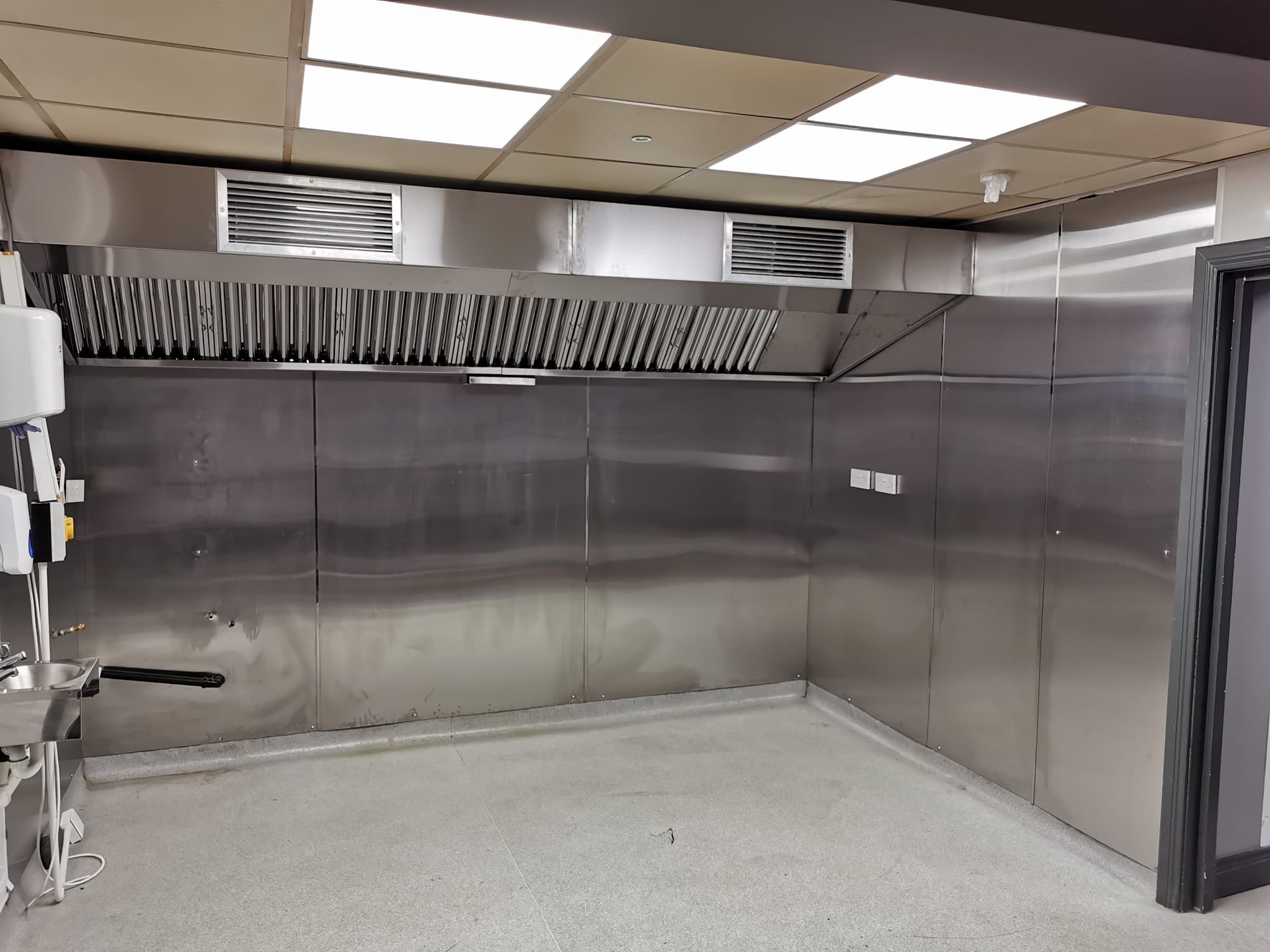
When it comes to finishing the walls in a commercial kitchen, the choice of material matters more than most people think. It’s not just about appearance — it directly impacts hygiene, durability, maintenance, and even long-term cost.
The three most common options are:
- Stainless steel wall cladding sheets
- Ceramic tiles
- PVC hygienic wall panels
Each has its place, but in real-world kitchen environments, they don’t perform equally.
Let’s break it down properly.
Why Wall Cladding Matters in a Commercial Kitchen
In a working kitchen, your walls are constantly exposed to:
- Heat
- Grease
- Moisture
- Cleaning chemicals
- Physical knocks and wear
So whatever you choose needs to be:
- Hygienic and easy to clean
- Durable under daily use
- Resistant to heat and corrosion
- Compliant with food safety standards
This is where the differences between materials become very clear.
Stainless Steel
Stainless steel is widely used in professional kitchens for a reason — it’s built for the environment.
Ke y Advantages
Hygiene (biggest win)
Stainless steel is non-porous, meaning it doesn’t absorb moisture, grease, or bacteria. There are no grout lines, no joins trapping dirt — just a smooth, wipe-clean surface.
Durability
It handles impact, heat, and heavy cleaning far better than alternatives. It won’t crack, chip, or degrade over time.
Heat Resistance
Ideal for areas behind cooklines, fryers, and ovens where tiles or PVC can struggle.
Low Maintenance
No regrouting, no sealing, no ongoing repairs — just clean it and move on.
Professional Finish
Gives that clean, industrial look most commercial kitchens aim for.
Downsides
- Higher upfront cost than tiles or PVC
- Needs careful installation for a clean finish
👉 But in reality, most contractors find it pays for itself over time through reduced maintenance and replacement.
Tiles
Tiles have been used in kitchens for decades and are still common, particularly in smaller or older installations.
Pros
- Lower initial material cost
- Familiar and widely available
- Easy to replace individual tiles
Cons
Grout is the problem
This is the biggest issue. Grout lines trap grease, dirt, and bacteria — and over time, they discolour and become difficult to clean properly.
Maintenance heavy
Grout needs cleaning, repairing, and sometimes replacing.
Durability issues
Tiles can crack or chip under impact, especially in busy kitchens.
Not ideal for high-demand environments
They can meet standards — but they don’t make life easy.
Installation Costs
With increased labour demand and a shortfall of tradesmen in the UK and Ireland finding a suitably qualified tiler is also a difficult task. Tiles require skill and training to install, much more difficult than PVC or Stainless Steel.
PVC Hygienic Wall Cladding Panels
PVC panels have grown in popularity, especially for budget-conscious projects.
Pros
- Quick and easy to install
- Smooth surface (no grout)
- Lower cost than stainless steel
- Lightweight and easy to cut
Cons
Heat limitations
PVC will warp or degrade in high-temperature areas (e.g. behind cooklines) not recommended in these parts of the kitchen.
Durability
More prone to scratching, denting, and long-term wear.
Joints and trims
Although better than tiles, joints and trims can still trap dirt if not installed perfectly.
Perception
Doesn’t give the same high-end, professional feel as stainless steel.
So, What’s the Best Option?
If you’re fitting out a serious commercial kitchen, stainless steel is hard to beat.
Tiles can work — but come with ongoing cleaning and maintenance headaches.
PVC panels are a decent mid-range option — but struggle in high-heat, high-use areas.
Stainless steel, on the other hand, is:
- More hygienic
- More durable
- Easier to maintain
- Better suited to demanding environments
That’s why you’ll see it used in:
- Restaurants
- Commercial kitchens
- Food production facilities
- Catering environments
Final Thoughts
Choosing wall cladding isn’t just about getting the job finished — it’s about how that kitchen performs over the next 5–10 years.
If you want something that:
- Meets hygiene standards easily
- Handles daily abuse
- Keeps maintenance to a minimum
Then stainless steel wall cladding is the smarter long-term choice.