

Building your own home is one of the most exciting and rewarding projects you can undertake. Every decision, from insulation levels and heating systems to lighting and finishes, will influence how comfortable and efficient your home is for years to come.
One area that is often overlooked during the planning stages is ventilation. While many self-builders spend considerable time researching heat pumps, underfloor heating, and renewable technologies, far fewer give the same attention to the ductwork that allows a ventilation system to perform effectively.
The reality is that even the most advanced ventilation unit will struggle if it is connected to poorly designed ductwork. Choosing the right combination of ductwork and flexible ductwork is essential for maintaining good indoor air quality, reducing noise, improving energy efficiency, and ensuring long-term system performance.
At Fresh Air Supplies, we’ve spent more than 35 years helping contractors, self-builders, and homeowners choose the right ventilation products for their projects. In this guide, we’ll explain everything you need to know about ductwork and flexible ductwork, helping you make informed decisions before construction begins.
Why Ventilation Matters in Modern Homes
Modern homes are more airtight than ever before.
Improved insulation standards, better windows, and enhanced building techniques have dramatically reduced heat loss. While this is excellent for energy efficiency, it also means homes can trap moisture, pollutants, and stale air if ventilation is not properly considered.
A well-designed ventilation system helps to:
- Remove excess moisture
- Reduce condensation and mould growth
- Improve indoor air quality
- Eliminate cooking and bathroom odours
- Maintain comfortable living conditions
- Support compliance with Building Regulations
However, the performance of any ventilation system depends heavily on the quality and design of the ductwork network.
What Is Ductwork?
Ductwork is the network of tubes, pipes, and fittings that transport air throughout a ventilation system.
Whether you’re installing a simple extract system or a whole-house Mechanical Ventilation with Heat Recovery (MVHR) system, the ductwork serves as the pathway that moves fresh air into the property and removes stale air from key areas.
Well-designed ductwork helps ensure that airflow reaches every room efficiently and quietly.
Poorly designed ductwork can result in:
- Reduced airflow
- Increased noise levels
- Higher running costs
- Poor indoor air quality
- Reduced system efficiency
For self-builders, getting the ductwork right from the outset can prevent costly alterations later.
Understanding the Different Types of Ductwork
There are several types of ductwork commonly used in domestic ventilation projects.
Flexible Ductwork
Flexible ductwork is one of the most versatile products available for residential ventilation systems.
Manufactured with a flexible inner core supported by a wire helix, it can easily navigate around obstacles and through confined spaces.
Benefits of flexible ductwork include:
- Quick installation
- Excellent flexibility
- Reduced installation time
- Ideal for difficult routes
- Cost-effective for shorter runs
Flexible ductwork is particularly useful when connecting air valves, ventilation grilles, and terminals to the main duct network.
However, while flexible ductwork offers many advantages, it should generally be kept as short and straight as possible to maintain optimal airflow performance.
Rigid Ductwork
Rigid ductwork is commonly used for the primary sections of domestic ventilation systems.
Available in circular and rectangular formats, rigid systems offer:
- Improved airflow performance
- Lower resistance
- Greater durability
- Easier maintenance
- Long service life
For many self-build projects, rigid ductwork forms the backbone of the ventilation system, with flexible ductwork used only for final connections.
Spiral Ducting
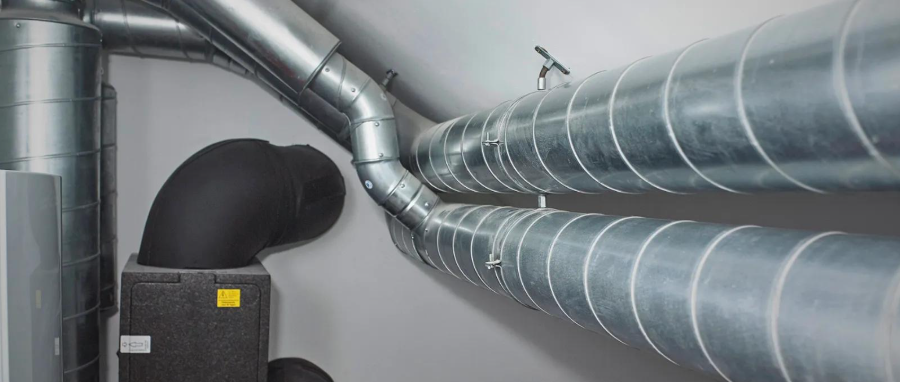
Spiral ducting is widely regarded as one of the most robust and efficient ducting solutions available.
Manufactured from galvanised steel, spiral ducting offers:
- Excellent strength
- Low air leakage
- Long-term durability
- High airflow efficiency
- Professional finish
Spiral ducting is increasingly popular in modern self-build projects where long-term performance and energy efficiency are priorities.
When Should Flexible Ductwork Be Used?
Many self-builders ask whether flexible ductwork can be used throughout an entire ventilation system.
While it is extremely useful, best practice is usually to use flexible ductwork selectively.
Ideal applications include:
- Connecting air valves
- Connecting ventilation grilles
- Tight loft spaces
- Difficult routing areas
- Short branch connections
Using excessive lengths of flexible ductwork can increase airflow resistance and reduce system efficiency.
The best systems often combine rigid ductwork for the main runs with flexible ductwork where flexibility is genuinely needed.
Planning Ductwork During the Self-Build Process
One of the biggest mistakes self-builders make is leaving ventilation planning until the later stages of construction.
By this point, valuable installation space may already have been lost.
Ductwork should be considered during the design phase alongside:
- Structural layouts
- Ceiling voids
- Utility rooms
- Service risers
- Loft spaces
- Plant room locations
Early planning helps avoid costly compromises and ensures the most efficient duct routes can be achieved.
Choosing the Right Ductwork for Your Ventilation System
The ideal ductwork solution depends on the type of ventilation system being installed.
MVHR Systems
Mechanical Ventilation with Heat Recovery systems require carefully designed ductwork networks to maintain balanced airflow throughout the property.
For MVHR installations, airflow efficiency is critical, making rigid ductwork and spiral ducting popular choices.
Continuous Extract Systems
Continuous Mechanical Extract Ventilation (MEV) systems often use a combination of rigid and flexible ductwork depending on the layout.
Intermittent Extract Systems
Bathroom and kitchen extract systems may use shorter duct runs, making flexible ductwork a practical solution in many situations.
The Importance of Ventilation Grilles and Air Valves
While ductwork forms the backbone of the system, ventilation grilles and air valves are responsible for delivering air into occupied spaces.
Choosing the right ventilation grilles helps:
- Improve air distribution
- Enhance comfort
- Support system efficiency
- Achieve a cleaner aesthetic finish
The best results are achieved when ventilation grilles, ductwork, and flexible ductwork are considered as part of a complete ventilation strategy rather than as individual components.
Reducing Noise in Ductwork Systems
Noise can quickly become a source of frustration if ventilation systems are not designed correctly.
Common causes include:
- Excessive air velocity
- Poor duct sizing
- Sharp bends
- Fan vibration
- Lack of attenuation
Self-builders should consider incorporating acoustic attenuators where appropriate, particularly in bedrooms and living spaces.
Combining correctly sized ductwork, flexible ductwork, and attenuators can help create a quieter and more comfortable indoor environment.
Common Ductwork and Flexible Ductwork Mistakes
Over the years, we’ve seen many self-build projects encounter avoidable issues.
Using Too Much Flexible Ductwork
Flexible ductwork is excellent for short connections but should not replace properly designed main duct runs.
Sharp Bends and Kinks
Airflow is always improved when duct routes are kept as straight as possible.
Poor Support
Inadequately supported ductwork can sag over time, increasing resistance and reducing efficiency.
Incorrect Duct Sizing
Undersized ductwork can create noise issues and restrict airflow.
Ignoring Future Access
Ventilation systems require occasional inspection and maintenance, so accessibility should always be considered during the design phase.
Future-Proofing Your Ventilation System
A self-build home is a long-term investment.
Choosing high-quality ductwork and flexible ductwork today can help avoid performance issues in the future.
Consider:
- Future maintenance access
- Energy efficiency requirements
- Potential system upgrades
- Long-term durability
- Airtightness performance
Investing in quality components at the construction stage is almost always more cost-effective than carrying out remedial work later.
Why Quality Ductwork Pays for Itself
It’s easy to focus on visible finishes during a self-build project, but some of the most important investments are hidden behind walls, ceilings, and floors.
Quality ductwork helps improve airflow, reduce energy consumption, minimise noise, and support healthy indoor environments. When combined with carefully selected flexible ductwork, ventilation grilles, and accessories, it forms the foundation of a reliable and efficient ventilation system.
In many cases, spending slightly more on quality ductwork at the beginning can result in years of improved comfort and lower operating costs.
Choose the Right Ductwork with Fresh Air Supplies
Choosing the correct ductwork and flexible ductwork is one of the most important decisions you’ll make when planning a self-build ventilation system. Whether you’re installing an MVHR system, upgrading an extract system, or building a new home from the ground up, selecting the right products will have a lasting impact on performance and comfort.
At Fresh Air Supplies, we have over 35 years of experience supplying high-quality ductwork, flexible ductwork, spiral ducting, ventilation grilles, fans, attenuators, and ventilation accessories throughout the UK and Ireland. Our knowledgeable team can help you select the right products for your project, ensuring reliable performance, efficient airflow, and excellent value for money.
Get in touch with Fresh Air Supplies today to discuss your self-build project and discover how expert advice can help you create a healthier, more comfortable home.