

When people think about fire safety in commercial buildings, they often picture fire alarms, extinguishers, emergency lighting, and sprinkler systems. Yet one of the most critical life safety components is often hidden from view and forgotten about entirely: fire dampers.
Installed within ventilation ductwork, fire dampers play a vital role in preventing the spread of fire and smoke between compartments of a building. However, because they are concealed behind ceilings, walls, and service risers, many are left unchecked for years, sometimes even decades.
At Fresh Air Supplies, we’ve worked with contractors, facility managers, and building owners across the UK and Ireland for more than 35 years. Time and time again, we’ve seen situations where neglected fire dampers have become a significant compliance issue and, more importantly, a serious safety risk.
In this guide, we’ll explore the hidden dangers of poorly maintained fire dampers, the legal responsibilities surrounding them, and what building owners can do to ensure their ventilation systems remain compliant and safe.
What Are Fire Dampers?
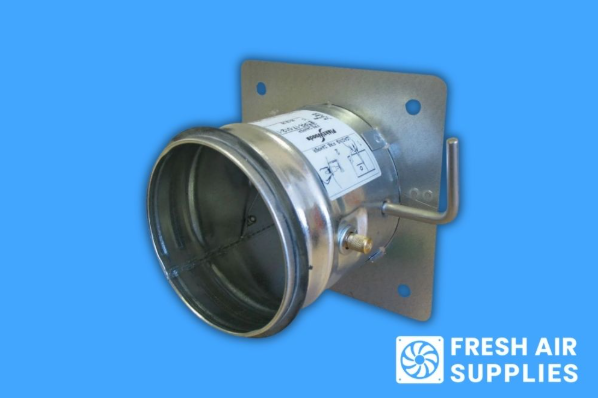
Fire dampers are passive fire protection devices installed within ductwork where ventilation systems pass through fire-rated walls, floors, or partitions.
Under normal operating conditions, they remain open, allowing air to move freely throughout the building. However, when exposed to high temperatures caused by a fire, the damper automatically closes, helping to maintain the fire compartment and prevent flames from spreading through the ventilation system.
Without properly functioning fire dampers, ductwork can effectively become a highway for fire, heat, and smoke to travel rapidly throughout a building.
Why Fire Dampers Are Often Overlooked
Unlike extract fans, grilles, or air handling units, fire dampers have no day-to-day interaction with building occupants.
Once installed, they can disappear from view entirely.
Common reasons fire dampers are neglected include:
- Lack of awareness from building owners
- Poor maintenance records
- Missing access panels
- Changes in ownership or management
- Assumptions that fire dampers are “fit and forget”
- Budget constraints delaying inspections
Unfortunately, neglecting fire dampers can have consequences far beyond a failed compliance audit.
The Life Safety Risks of Neglected Fire Dampers
Fire Spread Between Compartments
Modern buildings are designed around compartmentation.
Compartment walls and floors are intended to contain fire within a specific area long enough for occupants to evacuate and firefighters to respond.
A faulty fire damper can compromise this entire strategy.
If a damper fails to close during a fire, flames can spread through the duct system into adjoining rooms, floors, or escape routes.
What starts as a contained incident can quickly become a multi-compartment fire affecting a much larger area of the building.
Smoke Migration
Many people underestimate the danger posed by smoke.
Statistics consistently show that smoke inhalation is responsible for a significant proportion of fire-related fatalities.
A neglected fire damper may:
- Fail to close completely
- Become obstructed
- Have damaged blades
- Be stuck in the open position
In these situations, smoke can travel freely through ventilation systems and into corridors, stairwells, and occupied spaces.
Even if flames never reach occupants, smoke can make evacuation impossible.
Increased Risk to Firefighters
Firefighters rely on compartmentation to predict fire behaviour and conduct safe rescue operations.
When fire dampers fail, fire can spread unpredictably through concealed ductwork, creating dangerous conditions for emergency responders.
This increases the complexity of firefighting operations and can put lives at greater risk.
Common Problems Found During Fire Damper Inspections
When professional inspections are carried out, several recurring issues tend to appear.
Seized or Stuck Dampers
Over time, dust, debris, corrosion, and mechanical wear can prevent dampers from operating correctly.
Some dampers remain partially open, while others become completely seized.
In either case, they may fail when needed most.
Damaged Blades
Fire damper blades can become bent, damaged, or obstructed during maintenance work or refurbishment projects.
Even minor damage can prevent proper closure.
Missing Identification Labels
Many older buildings contain fire dampers that are no longer identifiable.
Without clear labelling, maintenance teams may struggle to determine:
- Fire rating
- Manufacturer
- Inspection history
- Replacement requirements
Poor Installation
In some cases, the issue begins from day one.
We’ve seen installations where:
- Dampers were incorrectly supported
- Access for testing was impossible
- Fire stopping was incomplete
- Ductwork was modified after installation
Even the highest-quality fire damper cannot perform properly if it has been installed incorrectly.
Lack of Access Panels
One of the most common compliance failures is the absence of suitable access panels.
Without proper access, fire dampers cannot be inspected, tested, or maintained.
This often results in years of missed inspections.
The Financial Risks of Neglecting Fire Dampers
Costly Remedial Works
A routine inspection may identify issues affecting dozens or even hundreds of fire dampers throughout a building.
The longer problems remain undetected, the more expensive they become to rectify.
What could have been a simple maintenance visit may turn into:
- Damper replacement programmes
- Ceiling removal works
- Ductwork modifications
- Additional fire stopping requirements
Insurance Implications
Insurers increasingly expect building owners to demonstrate compliance with fire safety requirements.
Failure to maintain fire dampers may:
- Complicate insurance claims
- Increase premiums
- Lead to disputes following a fire
Maintaining inspection records can be just as important as carrying out the inspections themselves.
Business Interruption
A fire that spreads beyond its intended compartment can significantly increase building damage.
This can result in:
- Longer closures
- Loss of revenue
- Project delays
- Tenant disruption
For many businesses, the financial impact of downtime far exceeds the cost of regular fire damper maintenance.
Legal Responsibilities for Building Owners
Many building owners are unaware that maintaining fire dampers is not optional.
Under UK fire safety legislation, duty holders are responsible for ensuring fire protection systems remain effective throughout the building’s life.
This responsibility may fall to:
- Building owners
- Facilities managers
- Responsible persons
- Landlords
- Property management companies
Failure to maintain fire protection systems can lead to enforcement action and prosecution where serious deficiencies are discovered.
What Does BS 9999 Say About Fire Dampers?
BS 9999 provides guidance on fire safety in the design, management, and use of buildings.
The standard recommends that fire dampers should be tested at regular intervals, typically every two years, although annual testing may be required in environments such as:
- Hospitals
- Care homes
- High-risk facilities
The standard also emphasises the importance of maintaining accurate inspection and maintenance records.
Regular testing helps identify issues before they become life safety risks.
Best Practice for Maintaining Fire Dampers
To reduce risk and remain compliant, building owners should adopt a proactive maintenance strategy.
Maintain an Accurate Asset Register
Every fire damper should be recorded, including:
- Location
- Type
- Fire rating
- Manufacturer
- Inspection history
Ensure Adequate Access
Access panels should allow safe inspection and testing without damaging surrounding finishes.
Schedule Regular Testing
Inspections should be carried out by competent personnel familiar with fire damper systems and applicable standards.
Keep Detailed Records
Inspection reports should document:
- Damper condition
- Test results
- Defects identified
- Corrective actions taken
These records may be required during audits, insurance reviews, or fire safety assessments.
Replace Damaged Components Promptly
Delaying repairs can leave buildings exposed to unnecessary risk.
Where defects are identified, remedial action should be taken as soon as practical.
Choosing Quality Fire Damper Solutions
Not all fire protection products are created equal.
When specifying fire dampers, it’s important to select products from reputable manufacturers that have been independently tested and certified.
Quality products, combined with correct installation and ongoing maintenance, provide the best defence against fire spread through ventilation systems.
At Fresh Air Supplies, we understand the importance of reliable ventilation and fire safety products. With over 35 years of industry experience supplying contractors and businesses across the UK and Ireland, we know that compliance starts with choosing the right components and maintaining them correctly throughout their service life.
Keeping Your Building Safe, Compliant and Protected
Fire dampers may be hidden from view, but their importance should never be overlooked.
A neglected fire damper can undermine a building’s entire compartmentation strategy, allowing fire and smoke to spread rapidly and placing lives at risk. Beyond the safety implications, poor maintenance can lead to costly remedial works, compliance failures, insurance complications, and significant business disruption.
Regular inspection, testing, and maintenance are essential for ensuring fire dampers perform when they are needed most.
If you’re reviewing a ventilation project, upgrading an existing system, or looking for expert advice on ventilation components, contact Fresh Air Supplies today. Our experienced team can help you source high-quality ventilation products backed by expert knowledge, fast delivery, and over three decades of industry experience.