

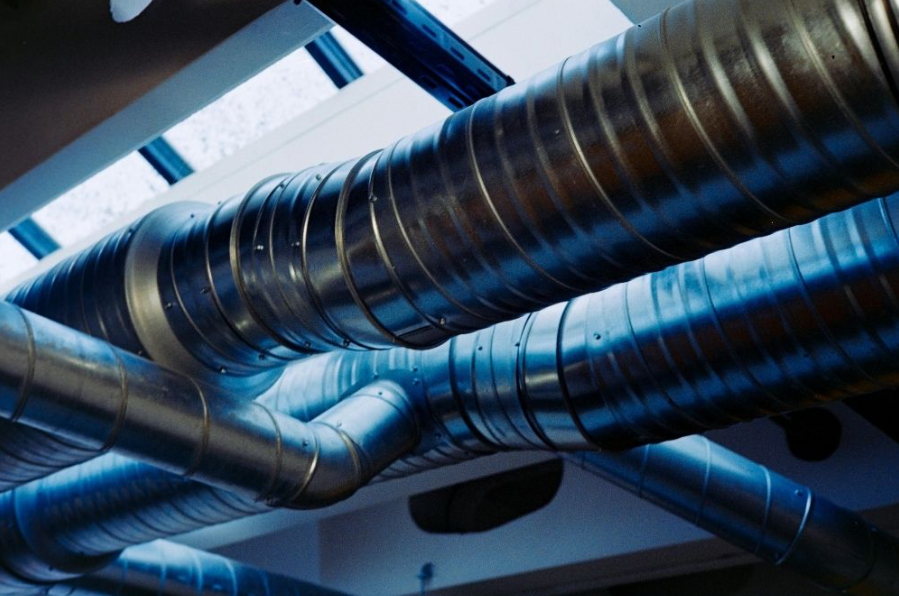
A well-designed ventilation system should improve indoor air quality, regulate temperature, and create a comfortable environment for building occupants. Unfortunately, many homeowners, contractors, and facility managers encounter a common problem after installation: excessive noise.
Whether it’s a constant humming from ductwork, air rushing through ventilation grilles, or vibration travelling throughout a building, ventilation noise can quickly become a source of frustration. In residential properties, it can affect sleep, concentration, and overall comfort. In commercial environments, it can impact productivity, customer experience, and workplace wellbeing.
The good news is that most ventilation noise issues can be identified and resolved with the correct system design and components. One of the most effective solutions is the use of attenuators, which are specifically designed to reduce noise levels within ventilation systems.
At Fresh Air Supplies, we have over 35 years of experience helping contractors, businesses, and homeowners create efficient and comfortable ventilation systems. In this guide, we’ll explore the most common ventilation noise problems, what causes them, and how attenuators can help deliver quieter, more effective airflow.
Why Ventilation Noise Occurs
Before addressing noise problems, it’s important to understand where the sound is coming from.
Ventilation systems generate noise from several sources, including:
- Extract and supply fans
- Air moving through ductwork
- Turbulence around bends and fittings
- Poorly selected ventilation grilles and diffusers
- Vibrations transmitted through building structures
- Undersized ductwork causing excessive air velocity
In many cases, the issue isn’t a faulty component but rather a design problem that allows noise to travel through the system.
Problem 1: Fan Noise Travelling Through Ductwork
One of the most common complaints is hearing the fan itself throughout the building.
This often presents as:
- A continuous humming sound
- Mechanical motor noise
- Low-frequency droning
- Noise transferring between rooms
Without adequate sound control measures, ductwork can act like a speaker system, carrying fan noise from one area of the building to another.
How Attenuators Help
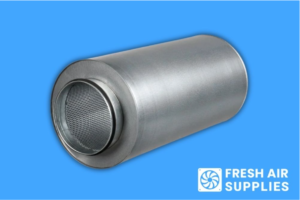
An attenuator is installed within the duct system between the fan and occupied spaces.
Its internal acoustic material absorbs sound energy while allowing air to pass through with minimal resistance.
This significantly reduces:
- Fan-generated noise
- Motor vibration noise
- Noise transmission between rooms
In many installations, an attenuator can dramatically improve acoustic comfort without affecting airflow performance.
Problem 2: Excessive Airflow Noise
Have you ever noticed a loud rushing or whooshing sound coming from one of your ventilation grilles?
This is often caused by excessive air velocity.
Common causes include:
- Undersized ductwork
- Oversized fans
- Poor balancing
- Incorrect grille selection
When air is forced through a restricted opening at high speed, turbulence is created, generating unwanted noise.
Alongside attenuators, properly specified ventilation grilles play an important role in creating comfortable indoor environments. Quality grilles help distribute air effectively throughout a space while supporting the overall performance of the ventilation system.
How Attenuators Help
While attenuators cannot fix poor duct sizing, they can significantly reduce airborne noise generated by airflow turbulence.
Combined with proper duct design, quality ventilation grilles, and airflow balancing, attenuators help create a much quieter ventilation system.
For best results, attenuators should be specified during the design stage rather than added as an afterthought.
Problem 3: Noise Transferring Between Rooms
In offices, hotels, healthcare facilities, and even homes, ductwork can unintentionally transfer conversations and sound between rooms.
This phenomenon is known as cross-talk.
For example:
- Conversations in one office may be heard in another
- Noise from a kitchen may travel into bedrooms
- Meeting room discussions may become audible elsewhere
This can create privacy concerns and reduce occupant comfort.
How Attenuators Help
Cross-talk attenuators are specifically designed to reduce sound transmission through shared ductwork.
They absorb sound travelling within the duct system while maintaining airflow between spaces.
This makes them particularly valuable in:
- Offices
- Schools
- Hospitals
- Hotels
- Apartment developments
Problem 4: MVHR System Noise
Mechanical Ventilation with Heat Recovery (MVHR) systems have become increasingly popular in modern homes due to improved energy efficiency and airtight construction standards.
However, poorly designed MVHR systems can become noisy.
Common complaints include:
- Air rushing through supply valves
- Fan noise in bedrooms
- Noise from extract points
- Noise around supply and extract ventilation grilles
- Vibration from the MVHR unit
Because MVHR systems often run continuously, even small amounts of noise can become irritating over time.
How Attenuators Help
Acoustic attenuators are considered best practice for many MVHR installations.
They are typically installed on:
- Supply air ducts
- Extract air ducts
- Intake ductwork
- Exhaust ductwork
By reducing sound transmission throughout the system, attenuators help ensure that occupants enjoy the benefits of fresh air without unnecessary noise.
Problem 5: Vibration Noise
Not all ventilation noise is airborne.
Some noise is structure-borne, meaning vibrations travel through building materials rather than through the air itself.
Common symptoms include:
- Buzzing ceilings
- Vibrating walls
- Rattling ductwork
- Low-frequency rumbling
These issues are often caused by:
- Fan vibration
- Poor mounting methods
- Insufficient support brackets
- Lack of vibration isolation
How Attenuators Help
While vibration control products may also be required, attenuators can help reduce the transmission of associated airborne noise throughout the duct network.
A comprehensive noise control strategy often combines:
- Acoustic attenuators
- Anti-vibration mounts
- Flexible connectors
- Proper duct supports
Problem 6: Noisy Commercial Ventilation Systems
Commercial ventilation systems often move much larger volumes of air than domestic installations.
Restaurants, offices, retail units, and industrial facilities can all experience noise issues if acoustics are overlooked.
Common complaints include:
- Loud extract systems
- Excessive grille noise
- Plant room noise
- Occupant discomfort
Noise can become particularly problematic in environments where communication is essential.
In commercial applications, ventilation grilles are often one of the most visible components of a ventilation system. Choosing the correct grille for the airflow requirements helps ensure effective air distribution while complementing the acoustic performance provided by attenuators.
How Attenuators Help
Commercial attenuators are designed to handle larger airflow volumes while delivering significant noise reduction.
They are commonly used in:
- Office buildings
- Schools
- Hospitals
- Hotels
- Retail premises
- Industrial facilities
Proper attenuator selection helps achieve both acoustic performance and airflow efficiency.
Choosing the Right Attenuator
Not all attenuators are the same.
Factors to consider include:
Duct Size
The attenuator must match the duct dimensions to maintain airflow performance.
Noise Source
Different noise frequencies require different attenuation strategies.
Available Space
Some installations may require compact attenuators where ceiling void space is limited.
Airflow Requirements
Pressure drop must be considered to ensure system performance is not compromised.
Working with an experienced ventilation supplier can help ensure the correct product is selected for the application.
Best Practice for Reducing Ventilation Noise
While attenuators are highly effective, they work best as part of an overall system design strategy.
Consider the following:
Size Ductwork Correctly
Larger ductwork often reduces air velocity and noise generation.
Select Quality Ventilation Grilles and Diffusers
Ventilation grilles play an important role in both airflow performance and occupant comfort. Choosing the correct grille for the application helps ensure air is distributed effectively throughout the space while supporting the overall efficiency of the ventilation system.
When combined with correctly sized ductwork and attenuators, quality ventilation grilles help create a balanced system that delivers fresh air quietly and efficiently.
Avoid Excessive Bends
Sharp bends and sudden transitions can increase airflow noise.
Balance the System
Proper commissioning ensures airflow rates remain within design limits.
Install Attenuators Early
Incorporating attenuators during system design is typically more effective and cost-efficient than retrofitting later.
Why Attenuators Are an Essential Part of Modern Ventilation Systems
Noise control is no longer a luxury, it’s an important part of creating comfortable indoor environments.
Whether you’re designing a new commercial ventilation system, installing an MVHR system in a modern home, or upgrading existing ductwork, attenuators play a vital role in reducing noise and improving occupant comfort.
Working alongside components such as ductwork, fans, diffusers and ventilation grilles, attenuators help create systems that are both effective and comfortable for building occupants.
When properly specified and installed, they help create ventilation systems that are both effective and virtually unnoticed by the people using the building every day.
Creating Quieter Ventilation Systems with Fresh Air Supplies
Ventilation systems should improve comfort, not become a source of distraction. By understanding the causes of ventilation noise and incorporating the right attenuators into your design, you can achieve excellent airflow performance without compromising acoustic comfort.
At Fresh Air Supplies, we have over 35 years of experience supplying high-quality ventilation products to contractors, businesses, and homeowners throughout the UK and Ireland. Our team can help you choose the right attenuators, ducting, ventilation grilles, diffusers, and accessories to create quieter, more efficient ventilation systems for any project.
Contact Fresh Air Supplies today to discuss your requirements and discover the difference expert advice can make.