

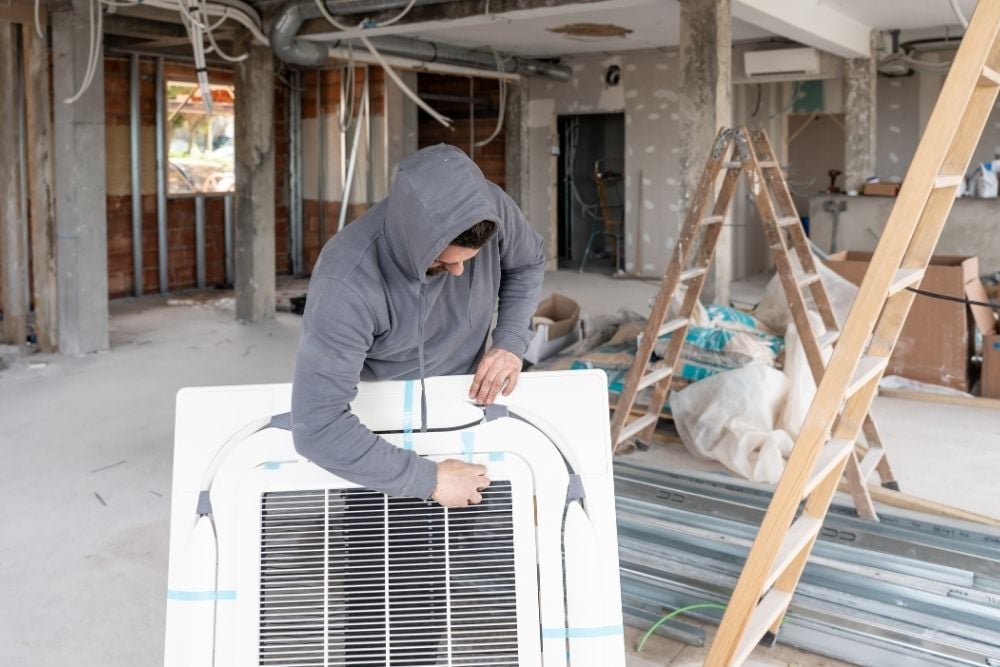
Grilles are one of the most visible parts of any ventilation system. Yet they are often overlooked.
Most people only notice them when something goes wrong. A bedroom that whistles when the fan starts. A cold draught across a desk. A diffuser that looks clean at first, then gathers dust within months. By the time this reaches the installer, the rest of the system is already in place. The grille is left to carry the blame.
After more than 35 years working with contractors across the UK and Ireland, we see the same pattern time and again. Grille selection is not a finishing touch. It is a performance decision. It needs the same level of thought as fan sizing or duct layout.
In this guide, we explain how to choose ventilation grilles that work properly, look right, and last.
Why Grille Selection Matters More Than You Think
A grille is the final point before air enters the room. That matters more than it seems.
If it is undersized, air speeds increase and noise follows. If the free area is restricted, pressure builds and the fan works harder. If the finish is wrong, corrosion or staining appears early. If the air pattern is wrong, the room feels uncomfortable, even if everything else was done correctly.
You can get every other part of the system right and still end up with poor results. The grille is often where problems show.
Step 1: Match the Grille to the Application
Every space has different demands.
A WC extract grille has a simple role. Move air out quietly and look acceptable. A meeting room diffuser has a tougher task. It needs to distribute air evenly, avoid cold spots, and stay quiet during use.
Start with the basics. What is the grille expected to do?
Domestic supply and extract Bedrooms, kitchens, bathrooms. Lower airflow, but higher sensitivity to noise and appearance. Domestic ventilation rates are set out in Approved Document F of the Building Regulations.
Commercial supply Offices, retail, classrooms. Higher airflow. Greater demand on comfort and sound levels.
Commercial extract Kitchens and plant rooms. Heat, moisture, and contamination all come into play. Commercial kitchen extract is covered in detail by the BESA DW/172 Specification for Kitchen Ventilation Systems.
External weather louvres Intake and discharge points. Must manage rain, airflow, and protection together.
Get this right first. Everything else follows.
Step 2: Get the Free Area Right
Free area is the part of the grille that air can actually pass through. It is not the same as the overall size.
This is where many projects fall short.
A 300 by 300 grille does not mean a full open area. Once you allow for blades and frames, the usable area can drop to 60 to 75 per cent, sometimes less.
If airflow is based on duct size instead of free area, air speeds increase once installed. That leads to noise. It is one of the most common issues we see.
Simple rules to follow:
Size the grille to the airflow, not the duct Check manufacturer free area data Keep face velocity low for supply Allow enough free area for extract
In quieter spaces, going one size up often solves problems before they start.
Step 3: Understand Throw, Spread and Drop
For supply air, how it leaves the grille matters as much as the volume.
Throw is how far the air travels Spread is how wide it moves Drop is how much it falls
These three factors shape comfort.
In offices, air needs to reach across the space without hitting occupants directly. In meeting rooms, even distribution matters more. In retail, obstacles change how air behaves.
Detailed guidance on air distribution, throw and room air movement is set out in CIBSE Guide B2: Ventilation and Ductwork, and the values it covers should be checked early, not after installation.
Step 4: Choose the Right Grille Type
Different designs suit different jobs.
Egg crate grilles High free area. Ideal for extract.
Single deflection grilles Good for directional airflow in one plane.
Double deflection grilles Adjustable in both directions. Common in commercial supply.
Linear bar grilles Slim and architectural. Used where appearance matters.
Disc valves and diffusers Compact and neat. Common in domestic projects.
Invisible diffusers Flush finish. Used in design led spaces.
Weather louvres Built for external use. Handle airflow and rain together.
The right choice depends on the space, not convenience.
Step 5: Material and Finish
Material choice affects lifespan.
A standard coated steel grille may suit an office. Place it in a humid or coastal setting and it will not last.
General guidance:
Aluminium for general use Stainless steel for harsh or wet areas Powder coated steel for standard interiors Painted finishes for visual integration
Wrong material choice leads to early failure. That usually means replacement.
Step 6: Acoustic Considerations
Noise at the grille often comes from poor sizing or airflow issues.
High face velocity creates sound. So does turbulence from poor duct layout.
To reduce noise:
Use larger grilles where possible Install attenuators upstream Avoid sharp bends before the grille Follow manufacturer noise data
Quiet systems are planned. They do not happen by chance. Workplace noise exposure is regulated under the HSE noise guidance, and ventilation contributes to overall background sound levels in occupied spaces.
Step 7: Commercial Project Considerations
On larger projects, grille selection ties into the wider system.
Consultants will often define airflow, noise, and distribution targets. The grille must meet those requirements and fit the design.
Working with a coordinated product range helps. It avoids mismatched components and reduces risk during installation. The BESA DW/144 Specification for Sheet Metal Ductwork sets the benchmark for ductwork construction quality on commercial work, and grille selection should align with the wider system specification.
Early specification saves time and cost later.
Step 8: Installation and Commissioning
Even the right grille can underperform if installed poorly.
Common issues include:
Damaged frames reducing airflow Poor duct connections causing turbulence Air leakage around the grille Adjustable blades left unchecked
Commissioning should include airflow checks, blade adjustment, and noise testing.
A small amount of time here prevents ongoing issues.
Common Mistakes to Avoid
We see the same problems repeatedly:
Grilles sized to match ducts instead of airflow Free area ignored Material choice overlooked No acoustic planning Poor coordination with design
These are simple to avoid when considered early.
Final Thoughts
Grilles are not just a finishing detail. They are part of how the system performs in real use.
Get the sizing right. Match the type to the space. Choose materials carefully. Coordinate with the wider system.
If you are planning a project and want practical advice, our team at Fresh Air Supplies can help. With decades of experience and direct access to leading product ranges, we support you from design through to installation. Get in touch with our team today to talk through your project.
Update On 20 Oct 2026
In this guide, we explored why ventilation grilles are a critical performance decision rather than a mere finishing detail. We looked into how proper air outlet selection—understanding free area, throw, spread, and drop—prevents acoustic issues and draughts. Furthermore, we examined the nuances of single vs double deflection grilles, helping contractors navigate material choices, CIBSE compliance, and BESA standards. Whether you are specifying domestic extract valves or commercial linear bar diffusers, we recommend planning your HVAC requirements early. Get in touch with our team to ensure your next installation achieves optimal indoor air quality and compliance.