

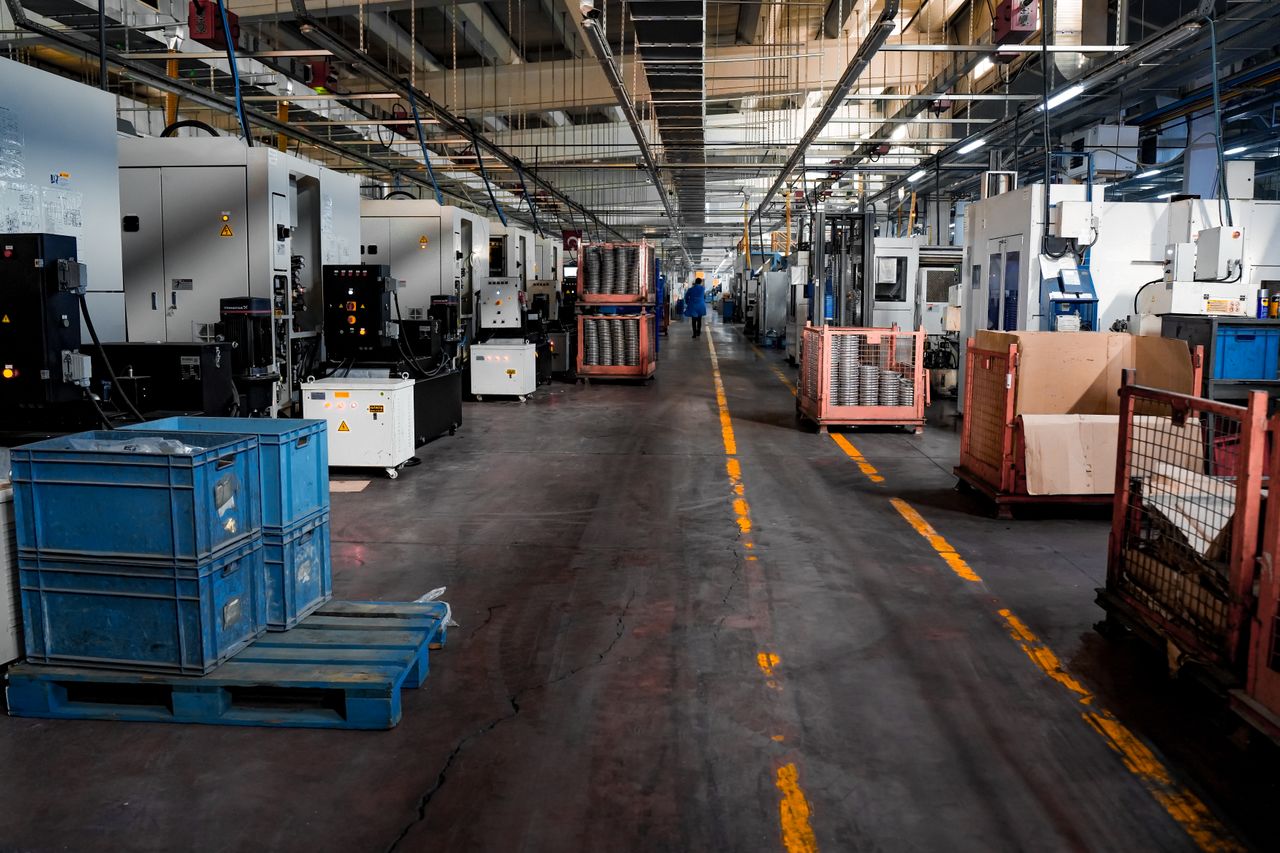
Anyone responsible for an industrial building knows the truth about airflow.
When it is right, the site works better.
When it is wrong, problems start piling up.
Heat hangs in the air. Dust settles where it should not. Fumes linger. Production areas feel uncomfortable. Staff complain. Equipment spaces become harder to manage. Compliance questions start appearing. What should be a straightforward working environment turns into something far more awkward.
That is why ventilation is not a side issue in factories, warehouses and industrial facilities.
It is part of safety.
It is part of performance.
It is part of compliance.
And it is exactly why Fresh Air Supplies is so well placed to serve this market.
Fresh Air Supplies is not a generic online supplier trying to cover every corner of building products. It is a focused UK supplier of ventilation, ducting and HVAC components for residential, commercial and industrial use. For factories, production units, warehouses and industrial plant managers, that specialism matters because industrial environments do not need vague promises. They need heavy-duty ducting solutions, dependable extraction products and a supplier that understands that airflow is critical to the running of the site.
Why industrial and manufacturing facilities are such an important market
Industrial buildings create demand that is both constant and serious.
Unlike a simple domestic job, industrial ventilation is rarely about convenience alone. It is often tied to process conditions, worker comfort, dust and fume control, heat management, extraction performance and the safe movement of air across large spaces.
That is what makes this sector such a strong fit for Fresh Air Supplies.
A factory may need air extraction systems across several production zones.
A warehouse may need better warehouse ventilation to deal with stale air, heat build-up or poor circulation.
A production unit may need dust and fume control improved in line with practical safety needs.
A plant manager may need to replace damaged ducting, upgrade extraction runs or source more robust components that can cope with harder conditions.
This is not occasional demand.
It is built into the life of the facility.
Why airflow is so important in industrial environments
In industrial settings, air is part of the working environment in a very direct way.
It affects comfort, but it also affects visibility, cleanliness, temperature control and exposure to harmful substances. HSE says employers must make sure there is adequate ventilation in enclosed workplace areas, and explains that ventilation brings in fresh air while removing indoor air that may be stale, hot, humid or polluted by work processes. (HSE)
That matters enormously in factories and warehouses.
A poorly ventilated office is unpleasant.
A poorly ventilated manufacturing area can be a much bigger problem.
That is why industrial managers care so much about:
- Air extraction systems
- Dust extraction and fume control
- Warehouse airflow
- General ventilation performance
- Heavy-duty ducting that will stand up to the environment
It is also why a specialist supplier matters more here than in softer, lower-stakes markets.
Dust and fume control are not optional
This is one of the clearest reasons industrial and manufacturing facilities need proper ventilation solutions.
HSE’s current COSHH essentials guidance says local exhaust ventilation is the commonest form of engineering control and should be used to help reduce exposure to an adequate level across a range of tasks involving solids and liquids. HSE’s 2026 commissioning guidance also says employers should commission LEV systems to make sure they adequately protect people from breathing in harmful substances. (HSE)
That is a serious message.
Dust and fume control is not just about keeping the place pleasant. It is about controlling exposure and protecting workers.
In some processes, general ventilation alone is not enough. HSE’s enforcement position on welding fume says general ventilation does not achieve the necessary control for all welding fume and that suitable local exhaust ventilation is required. (HSE)
For industrial buyers, that is exactly why product choice matters. Heavy-duty ducting solutions, dependable extraction components and the right airflow setup are not decorative extras. They are part of how the site manages risk.
Air extraction systems sit at the heart of many industrial sites
Industrial buildings often depend on extraction more than people realise.
Processes create dust, heat, vapours, fumes and fine particulates. If these are not captured and moved properly, the whole environment suffers. That is why air extraction systems are one of the clearest industrial use cases for Fresh Air Supplies.
An industrial buyer may need:
- Heavy-duty ducting runs
- Rigid ducting for more robust installations
- Spiral ducting where strength and clean airflow routes matter
- Fans and extraction components for larger spaces
- Connectors, reducers and fittings that work in practical industrial layouts
- Components suitable for dust extraction system for woodworking UK applications
- Products relevant to industrial fume extraction systems UK environments
This sort of work rewards suppliers with focus. A plant manager or facilities engineer does not want to sift through irrelevant categories. They want a supplier whose range makes sense for airflow, extraction and ducting from the outset.
Warehouse ventilation is more important than many businesses realise
Warehouses are often treated as simple spaces.
They are not.
Large enclosed volumes can become stale, hot or uncomfortable if airflow is poor. Depending on the operation, there may also be vehicle movement, packaging dust, warm zones, enclosed picking areas or awkward corners where air simply does not feel right.
HSE’s ventilation guidance says employers should identify poorly ventilated areas and assess enclosed workspaces so they can decide what improvements are needed. (HSE)
That is highly relevant to warehouse operators and industrial property teams.
Warehouse ventilation is not always dramatic, but it is often neglected until people start noticing problems. Better airflow can make a site feel more manageable, more comfortable and easier to operate. That means steady demand for ventilation ducting, fans, grilles and airflow components that can support larger spaces properly.
Heavy-duty ducting matters because industrial conditions are harder on everything
This is one of the strongest commercial points in the industrial market.
Factories and production units do not always allow for delicate solutions. Equipment may be exposed to harder conditions, longer runs, higher volumes, dirtier air, more vibration or more demanding operational routines. That is why heavy-duty ducting solutions matter so much.
A buyer in this sector often needs more than basic, light-duty components.
They may need:
- Spiral ducting for stronger, more durable runs
- Rigid ducting where structure and reliability matter
- Fire rated ducting in more demanding specifications
- Acoustic ducting where noise control matters alongside airflow
- Industrial-scale fittings and accessories that can hold up in live environments
This is exactly where Fresh Air Supplies has a natural advantage. Its product focus allows it to serve customers who need ventilation and ducting that can stand up to real industrial use rather than simply look acceptable on a product page.
Compliance keeps ventilation firmly on the industrial agenda
Industrial managers do not only think about airflow because it affects comfort or efficiency.
They think about it because it affects compliance.
HSE’s workplace guidance says enclosed workplaces must have enough fresh or purified air, and its LEV guidance makes clear that extraction systems must be properly commissioned and maintained to control exposure. (HSE)
For buildings other than dwellings, Approved Document F Volume 2 remains the government’s guidance supporting Part F of the Building Regulations in England. The document applies to non-domestic buildings and covers the means of ventilation. (GOV.UK Assets)
That matters because industrial and manufacturing buyers often sit at the point where building-performance concerns meet health and safety concerns. A supplier that understands the seriousness of ventilation in that setting is always going to be more useful than a broad merchant that treats it as a side category.
Why factories and production units create such dependable demand
Factories rarely stand still.
Even when the building itself is unchanged, the demands inside it often shift. Lines move. Processes change. Plant gets upgraded. Working areas get reconfigured. Extraction needs evolve. Heat and airflow patterns stop matching the layout that made sense years earlier.
That creates ongoing demand for:
- New ducting runs
- Replacement fans
- Extraction upgrades
- Improved dust and fume control
- Better airflow through production zones
- Repairs and modifications to existing systems
This is one reason industrial customers are so valuable over time. They do not just buy once for a grand project and disappear. They return because the site keeps changing, and the ventilation system has to keep up.
That sort of repeat demand suits Fresh Air Supplies perfectly.
Why plant managers need a supplier that is easy to rely on
Plant managers and industrial maintenance teams usually have very little patience for unnecessary friction.
They need practical supply.
They need clarity.
They need confidence that if they order the right thing, it will arrive and do the job.
That is where Fresh Air Supplies becomes especially attractive.
The business offers:
- A focused range of ventilation and ducting products
- Strong relevance to industrial and manufacturing applications
- Clear product categorisation
- UK-wide delivery
- Suitability for replacement work, upgrades and larger procurement
For industrial buyers, that matters because they are often trying to solve real operational issues quickly. A supplier that helps them do that becomes much more valuable than one that merely lists products.
Warehouses, factories and plants all create recurring revenue opportunities
This is one of the strongest commercial reasons to target this sector.
Industrial ventilation is not a one-off spend.
It generates ongoing needs through:
- Maintenance purchasing
- Replacement ducting
- Fan replacement
- Extraction upgrades
- Changes to plant layout
- Compliance-driven improvements
- General warehouse airflow improvements
That recurring pattern is exactly what makes the industrial segment so attractive for Fresh Air Supplies. It is not only about the first supply of components. It is about becoming the kind of specialist supplier that industrial customers come back to because the category remains critical year after year.
Why focused product supply matters more than broad retail choice
Industrial buyers rarely want endless browsing.
They want relevance.
They want to know the supplier understands air extraction systems, dust and fume control, warehouse ventilation and the heavier-duty end of ducting supply. They want to buy from somewhere that feels built for practical building-services and ventilation work.
That is one of the clearest strengths of Fresh Air Supplies.
Its proposition is straightforward: ventilation, ducting and HVAC components, available in one place, with a strong focus on airflow solutions. In an industrial context, that kind of clarity is more persuasive than a bigger but less focused catalogue.
Why Fresh Air Supplies makes sense for industrial and manufacturing facilities in 2026
By 2026, industrial managers are under pressure to keep buildings safe, productive and efficient without wasting time or budget.
That means they need suppliers who can help with the practical realities of airflow:
- Heavy-duty ducting solutions
- Air extraction systems
- Dust extraction and fume control
- Warehouse ventilation products
- Replacement and upgrade components
- Reliable UK supply for ongoing industrial needs
That is the shape of Fresh Air Supplies.
It is a specialist business built around ventilation and ducting at a level that makes sense for industrial environments. For factories, production units, warehouses and plant managers, that is exactly the sort of supplier relationship that proves its worth over time.
Final thoughts
Industrial and manufacturing facilities do not have the luxury of treating airflow as an afterthought.
Ventilation affects comfort, cleanliness, productivity, compliance and, in some settings, direct exposure control. Air extraction systems, dust and fume control and warehouse ventilation are not soft extras. They are part of how serious industrial sites operate safely and effectively.
That is why this market is such a good fit for Fresh Air Supplies.
It offers a specialist source for the ducting, extraction and airflow products these buildings need, backed by a business model that suits recurring demand, replacement cycles and practical industrial upgrades. For any site that depends on heavy-duty ventilation solutions, that is a strong and sensible proposition.
Summary
- Fresh Air Supplies is a strong fit for factories, warehouses and industrial plant managers because industrial buildings have a critical and ongoing need for ventilation, extraction and airflow control.
- HSE says employers must make sure there is adequate ventilation in enclosed workplaces and should assess their sites to identify poorly ventilated areas. (HSE)
- HSE’s current COSHH essentials guidance says local exhaust ventilation is the commonest form of engineering control for controlling exposure to hazardous substances, and its 2026 LEV guidance says employers should commission LEV systems to make sure they adequately protect people. (HSE)
- HSE also says general ventilation does not achieve the necessary control for all welding fume, which underlines the importance of proper extraction at source in industrial environments. (HSE)
- Approved Document F Volume 2 remains the government guidance supporting Part F of the Building Regulations for buildings other than dwellings in England. (GOV.UK Assets)
- Industrial sites often need heavy-duty ducting solutions, spiral ducting, rigid ducting, fire rated ducting, fans and extraction components for air extraction systems, dust and fume control and warehouse ventilation.
- Fresh Air Supplies stands out because it combines specialist ventilation focus, relevant product range and practical UK-wide supply for replacement work, upgrades and ongoing industrial demand.
FAQs
Why is ventilation so important in factories and industrial sites?
Because it affects both comfort and safety. HSE says workplace ventilation should bring in fresh air and remove indoor air that may be stale, hot, humid or polluted by work processes. (HSE)
What is the difference between general ventilation and local exhaust ventilation?
General ventilation improves overall air conditions in a space, while local exhaust ventilation captures contaminants closer to the source. HSE’s guidance makes clear that LEV is a key engineering control for reducing exposure to hazardous substances. (HSE)
Why do industrial facilities need heavy-duty ducting solutions?
Because industrial environments are often harder on systems. They may involve larger air volumes, dust, fumes, heat, vibration or more demanding operating conditions, so the ducting and extraction setup needs to be robust and dependable.
Is warehouse ventilation really that important?
Yes. Warehouses are large enclosed workspaces, and HSE says employers should identify poorly ventilated areas in enclosed workplaces. Good warehouse ventilation can improve comfort, reduce stale conditions and support better day-to-day operation. (HSE)
Why is this such a strong market for Fresh Air Supplies?
Because industrial sites create recurring demand. Systems need maintenance, ducting gets replaced, fans wear out, extraction setups get upgraded and operational changes often create new airflow requirements.
Does compliance play a big role in industrial ventilation decisions?
Very much so. HSE guidance on ventilation and LEV, along with Approved Document F Volume 2 for non-domestic buildings, keeps ventilation firmly tied to legal and practical standards in industrial environments. (GOV.UK Assets)
Why should an industrial buyer use Fresh Air Supplies instead of a general supplier?
Because Fresh Air Supplies focuses on ventilation, ducting and HVAC components rather than treating them as side products. That makes it easier for industrial buyers to find relevant solutions for extraction, airflow and heavy-duty ducting work.