

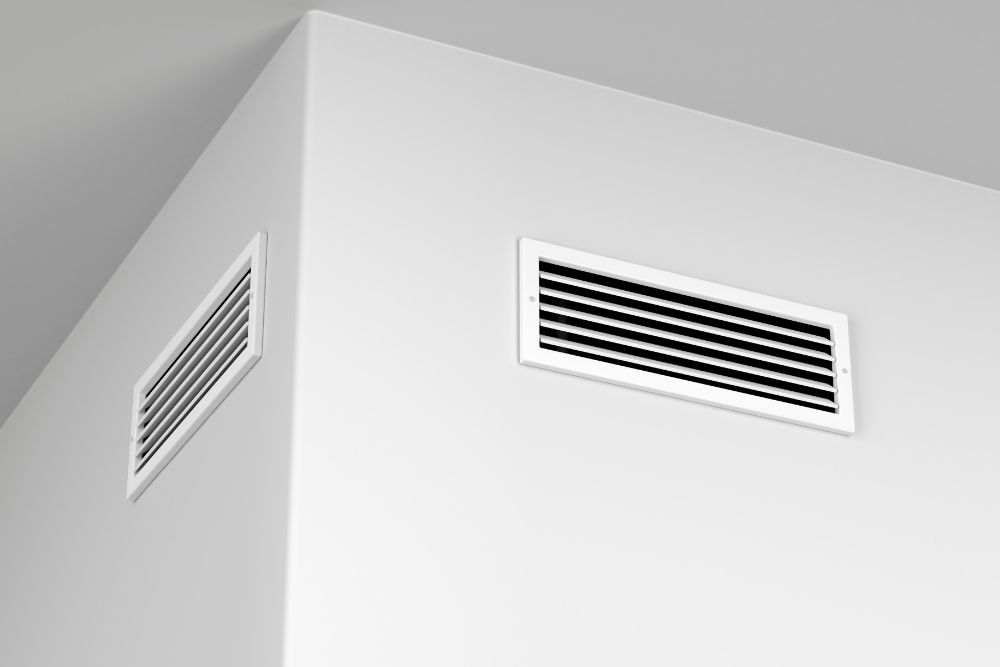
A noisy ventilation system is one of the quickest ways to turn a good installation into a customer complaint.
You can fit the best fan on the market. You can size the duct correctly. You can commission the airflow perfectly. But if the system hums, whistles, vibrates or roars every time it runs, the client will not care about airflow calculations. They will just say, “It’s too loud.”
After more than 35 years supplying contractors across the UK and Ireland, we have seen this repeatedly. The good news is that most ventilation noise problems are not complicated. They are usually caused by design shortcuts, incorrect component selection, or small installation errors.
In this guide, we will break down exactly why ventilation systems become noisy and, more importantly, how to fix the problem properly using correct duct sizing, attenuators and ventilation grille selection.
First, Identify the Type of Noise
Before you start replacing components, you need to understand what kind of noise you are dealing with. Not all ventilation noise is the same.
Most complaints fall into one of four categories:
- Low frequency humming from the fan
- Air rushing or “whooshing” at the grille
- Whistling at supply or extract terminals
- Vibration transferring through ceilings or walls
Each has a different cause and a different solution.
Problem 1: The Fan Is Overpowered for the System
This is extremely common in domestic installations, particularly bathroom and kitchen upgrades.
A high-performance fan is installed, but:
- The duct diameter is too small
- There are too many tight bends
- There is no attenuator
- The grille free area is restricted
The result is high static pressure and increased airflow velocity, which translates directly into noise.
How to Fix It
- Check the duct size. Undersized ducting forces the fan to work harder.
- Reduce excessive bends and sharp transitions.
- Install a correctly sized circular attenuator in the duct run.
- Ensure the grille has sufficient free area for the required airflow.
Noise is often a symptom of airflow restriction.
Problem 2: No Attenuator Installed
Many domestic systems and even some commercial installations are fitted without attenuators.
That may save money initially, but it nearly always leads to:
- Fan motor noise travelling down the duct
- Cross-room noise transfer
- Increased perceived loudness at the grille
An attenuator reduces duct-borne sound before it reaches occupied spaces.
Best Practice
- Install attenuators close to the fan in supply runs.
- In MVHR systems, fit attenuators on both supply and extract branches.
- Ensure the attenuator diameter matches the duct exactly.
An incorrectly sized attenuator can create pressure loss and make matters worse.
Problem 3: High Face Velocity at the Ventilation Grille
This is one of the biggest causes of whistling and air rush noise.
If too much air is pushed through too small a grille, velocity increases dramatically at the face. That produces:
- Whistling
- Hissing
- Draught complaints
- Uncomfortable air throw
Installers often underestimate the impact of grille selection.
How to Fix It
- Increase grille size to reduce face velocity.
- Choose a grille with higher free area.
- Use diffusers designed for higher airflow rates.
- Confirm airflow settings during commissioning.
It is not uncommon to fix a “noisy system” simply by changing the grille.
Problem 4: Poor Duct Layout
Spiral ducting is strong and efficient, but poor layout can create turbulence.
Common layout issues include:
- Multiple 90 degree bends in short runs
- Sudden diameter reductions
- Flexible duct not stretched tight or kinked
- Long unsupported spans causing sagging
Each of these increases resistance and noise.
We manufacture and supply high quality spiral ducting and fittings, and one of the most consistent pieces of advice we give contractors is simple. Plan the duct run properly before installation begins.
Smooth airflow equals quieter airflow.
Problem 5: Vibration Transmission
Sometimes the noise is not airflow at all. It is vibration.
You may hear:
- A humming ceiling
- A vibrating bulkhead
- Rattling at wall penetrations
This often occurs when:
- Ductwork is not properly supported
- The fan is rigidly connected without isolation
- The attenuator is in contact with structural elements
Solutions
- Install anti-vibration mounts on fans.
- Ensure independent duct supports.
- Avoid resting ductwork directly on plasterboard ceilings.
- Use flexible connectors where permitted.
A small vibration can amplify significantly through building structures.
Problem 6: Overuse of Flexible Duct
Flexible ducting has its place, but excessive use can create turbulence and resistance.
Common mistakes:
- Using too much flexible duct and allowing it to sag
- Leaving it compressed
- Allowing sharp bends
- Using long runs instead of rigid duct
This increases static pressure and raises noise levels.
Best practice is to use rigid spiral ducting for main runs and keep flexible duct lengths short and properly supported.
Problem 7: Poor Commissioning
Even a perfectly installed system can become noisy if airflow is not balanced correctly.
If airflow is set too high:
- Face velocity increases
- Fan speed increases
- Turbulence increases
Commissioning should confirm:
- Correct airflow rates
- Acceptable sound levels
- Balanced supply and extract
Part F compliance is only part of the job. Comfort matters too.
Designing for Quiet from the Start
The best solution to ventilation noise is prevention.
When planning a system, consider:
- Correct duct diameter
- Smooth transitions
- Minimal sharp bends
- Proper attenuator placement
- Appropriate grille free area
- Vibration isolation
- Professional commissioning
Quiet systems are rarely accidental. They are designed that way.
Quick Diagnostic Checklist
If a system is too loud, check:
- Is the duct diameter correct for airflow?
- Are attenuators installed?
- Is the grille large enough?
- Is face velocity excessive?
- Are there unnecessary bends?
- Is vibration being transferred?
- Has the system been properly commissioned?
Work through this methodically before replacing major equipment.
Why Quality Components Matter
Cheap grilles can whistle. Poorly manufactured attenuators can increase pressure loss. Low quality duct fittings can cause turbulence.
We supply high quality spiral ducting, fittings, attenuators and ventilation components to contractors who need reliability and fast turnaround .
Noise issues often arise from mixing high performance fans with low grade accessories.
Ventilation is a system. Every component matters.
Getting It Right First Time
A noisy ventilation system damages reputation. It leads to callbacks, additional labour and frustrated clients.
Most noise problems are preventable with:
- Correct design
- Proper sizing
- Quality components
- Careful installation
If you are planning a new project or trying to resolve a noise complaint, speak to our team at Fresh Air Supplies. We can help you select the right attenuators, ducting and ventilation grilles to deliver a system that performs properly and sounds the way it should.
Quiet. Efficient. Professional.
Get in touch today and let’s make your next installation one that works flawlessly from day one.
Update On 20 Oct 2026
In this guide, we explored why ventilation systems suffer from excessive noise and how to resolve these high noise levels on-site. We looked into common issues such as overpowered fans, high face velocity at the ventilation grille, poor spiral duct layouts, and a lack of properly sized attenuators. We also considered how to address vibration transmission and poor commissioning that make a system very loud for clients. By planning carefully and using quality components, we can prevent callbacks and ensure our installations meet Part F compliance. How loud is too loud for your current project, and what steps will you take to guarantee a quieter install?