

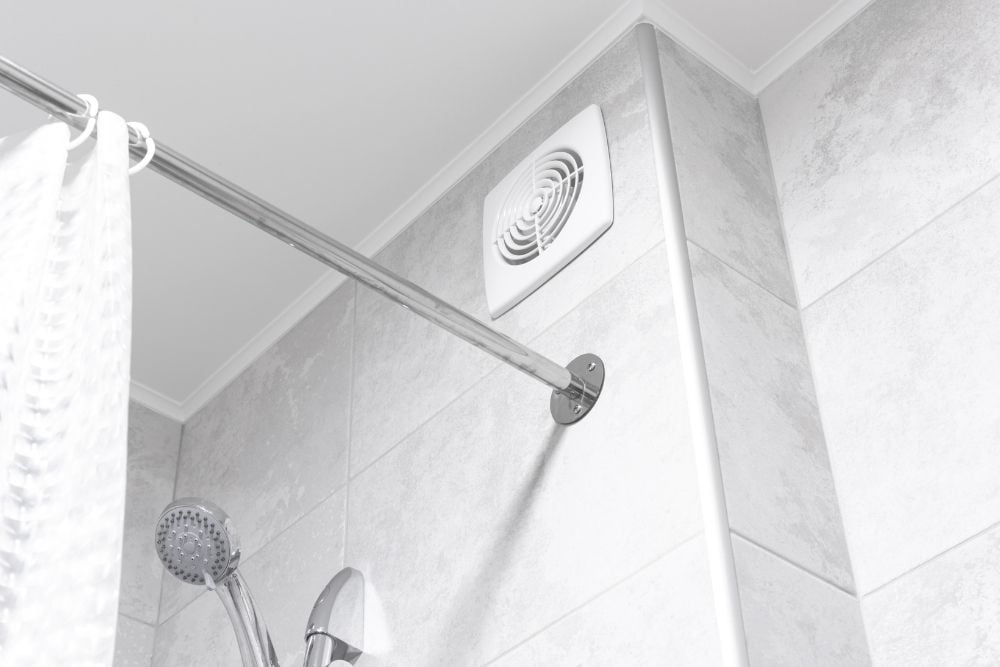
Bathroom extract should be simple. Fit the fan, connect the ducting, vent it outside, and the job is done.
That is the theory, anyway.
In practice, bathroom ventilation is one of the most common areas where poor ducting choices lead to disappointing results. The fan may look right on paper, but if the duct run is too long, poorly supported, uninsulated or full of tight bends, performance can drop off quickly. That is when you start seeing steamed-up mirrors that never clear, mould around the ceiling, noisy operation, and customers wondering why their new fan is not doing what it was meant to do.
At Fresh Air Supplies, we have seen this time and time again. The fan often gets blamed first, but the real issue is frequently the ductwork behind it. A badly designed duct run can turn a decent fan into an underperforming one.
That is why choosing the right flexible ductwork for a bathroom extract fan matters just as much as choosing the fan itself.
So, what works best?
The honest answer is that flexible ducting can work very well for bathroom extract fans, but only when it is used in the right way and in the right kind of installation. In some bathrooms, it is the most practical and cost-effective option. In others, it introduces unnecessary resistance and causes more trouble than it saves.
In this guide, we will look at where flexible ductwork works best, when insulated ducting is the better choice, which mistakes cause the most problems, and how to build a bathroom extract system that performs properly in the real world.
Why Bathroom Extract Systems Often Fail to Perform Properly
A bathroom fan is only one part of the extract system. The rest of the system matters just as much.
That may sound obvious, but it is still one of the biggest misunderstandings in domestic ventilation. A fan can be rated to deliver the airflow required, but once you add ducting, bends, external grilles, backdraught shutters and awkward routes through the building, that airflow can reduce more than people expect.
In a bathroom, that matters because moist air needs to be removed quickly. If it is allowed to sit in the room or move into colder parts of the house, condensation becomes a problem. Over time, that can lead to mould growth, damp corners, stained ceilings, peeling paint and complaints from homeowners who assumed a new fan would solve everything.
Usually, the root cause is not that the fan is faulty. It is that the ducting layout was treated as an afterthought.
Is Flexible Ducting Suitable for Bathroom Extract Fans?
Yes, it is and it is used successfully on bathroom extract systems every day.
Flexible ductwork is popular because it is practical. It is quick to install, easy to route through lofts and ceiling voids, and much easier to work with on awkward retrofit jobs than rigid alternatives. For many domestic bathroom applications, especially ceiling-mounted fans discharging through a loft or across a short void, flexible ducting is a sensible solution.
But it does have limitations.
Flexible ducting works best when the run is short, as straight as possible, properly supported and pulled fully taut during installation. Once it is left sagging, kinked or twisted around obstacles, it starts creating extra resistance, and that affects how well the fan can move air.
So the answer is not simply yes or no.
A better way to put it is this: flexible ductwork is a good option for bathroom extract fans when the duct run is short and simple. When the run is longer or more demanding, the type of ducting and the way it is installed become far more important.
Why Flexible Ducting Can Be The Right Choice
When used properly, flexible ducting offers several advantages on bathroom extract installations.
The first is ease of installation. On a typical domestic job, especially in a loft or ceiling void, it is often the quickest way to connect a bathroom fan to an external grille or roof terminal.
The second is adaptability. Older properties and renovation projects do not always give you neat, straight routes. Flexible ducting allows installers to work around structural obstacles and limited access without opening up far more of the building than necessary.
The third is cost-effectiveness. For short, uncomplicated runs, flexible ducting can provide a tidy, reliable solution without the extra labour involved in fitting a rigid duct system.
That is why it remains such a common choice across domestic extract work. The important thing is knowing where it suits the job and where it starts to work against you.
What Type of Flexible Ducting Works Best for Bathroom Extract?
There is no single answer for every project, but there are clear situations where one type of ducting makes more sense than another.
Insulated flexible ducting
For bathroom extract runs passing through a loft or any other cold space, insulated flexible ducting is usually the best option.
This is particularly important in UK homes, where warm, moisture-laden air from the bathroom often has to travel through a cold loft before it reaches the outside. When uninsulated ducting is used in that situation, condensation can form inside the duct as the warm air cools. Over time, that can lead to moisture collecting in low points, dripping back towards the fan, or causing issues in the surrounding area.
This is one of the most common bathroom extract problems we come across. A good fan is fitted, the airflow seems acceptable at first, and then colder weather arrives and the installation starts showing signs of trouble.
Using insulated flexible ducting from the start is usually the simplest way to avoid that.
For ceiling-mounted bathroom fans venting through unheated spaces, insulated flexible ducting is often the most reliable all-round choice.
PVC coated aluminium flexible ducting
For short, direct runs, PVC coated aluminium flexible ducting is often a very good fit.
It offers the flexibility needed for easy installation, while remaining suitable for general domestic extract applications where the route is not especially long or restrictive. This type of ducting is often ideal where the bathroom is close to an outside wall, or where the duct route is simple enough that the system resistance stays low.
Used properly, it can be a neat and cost-effective solution for many standard bathroom fan installations.
Acoustic flexible ducting
Acoustic flexible ducting can be worth considering where sound reduction is particularly important, such as bathrooms close to bedrooms or installations where noise has been an issue before.
That said, on most standard domestic bathroom jobs, noise problems are more commonly caused by poor duct sizing, bad routing or excessive resistance rather than the lack of acoustic ducting. In many cases, improving the layout and installation quality will make more difference than switching to a specialist acoustic product.
When Flexible Ducting Works Best
Flexible ducting performs best when it is being used in the kind of installation it suits naturally.
Short runs to an external wall
Where the bathroom is close to an outside wall and the extract route is direct, flexible ducting can work perfectly well. There is less resistance, fewer bends, and far less opportunity for performance to be lost.
Ceiling-mounted fans venting through a nearby loft
This is probably one of the most common domestic bathroom extract arrangements in the UK. A fan is installed in the ceiling, the duct passes through the loft, and the extract is discharged through a soffit, roof terminal or gable wall.
In that situation, insulated flexible ducting is often the most practical and sensible option, provided the run is kept short and supported properly.
Retrofit and renovation projects
Not every installation gives you a clear path from the bathroom to outside. In retrofit work, flexible ducting often makes a difficult job much more manageable. It allows the installer to route around obstacles and work within the constraints of the building without excessive disruption.
That is one of the reasons it remains such a useful product in domestic ventilation.
The Most Common Flexible Ducting Mistakes on Bathroom Extract Jobs
There are a few mistakes we see repeatedly, and most of them are avoidable.
One is leaving flexible ducting compressed rather than stretching it out fully. This creates extra resistance and makes it harder for the fan to move air effectively.
Another is using more duct than the job actually needs. Excess length often ends up forming loops or sagging sections, which reduce airflow and create places where condensation can collect.
A third is using uninsulated ducting across a cold loft. This is one of the fastest ways to create condensation-related problems in a bathroom extract system.
Tight bends are another common issue, especially directly off the fan outlet. Even a decent fan can lose performance if it is forced through a sharp turn straight away.
Poor joint sealing is also a major weakness. A system is only as good as its connections, and loose or poorly sealed joints can quickly undermine otherwise good installation work.
And finally, there is one mistake that should never happen but still does from time to time – venting bathroom extract into the loft instead of outside. Moist air must always be discharged externally.
What We Recommend in Most Bathroom Extract Applications
From a practical point of view, the best setup for many domestic bathrooms is fairly straightforward.
If the duct run is short and direct, standard flexible ducting can work very well, particularly where installation simplicity is a priority and the route does not create much resistance.
If the duct passes through a loft or any unheated void, insulated flexible ducting is usually the better option. It helps reduce condensation risk and gives the system a better chance of performing reliably over time.
If the route is longer, more complex or includes several bends, it is worth stepping back and considering whether flexible ducting is still the right answer throughout the whole run. In some cases, a different ducting strategy will deliver better long-term performance.
The key point is simple: do not choose flexible ducting just because it is convenient. Choose it because it suits the application.
Bathroom Extract Products That Help the System Perform Properly
At Fresh Air Supplies, we stock a wide range of ducting and ventilation products suitable for bathroom extract installations, including:
- PVC Coated Aluminium Flexible Ducting for short, practical domestic runs
- Insulated Flexible Ducting for loft routes and colder voids
- Duct tape and aluminium foil tape for sealing joints properly
- Jubilee band clips for secure connections
- Exterior grilles and terminals for proper discharge outside
- Domestic extract fans and accessories to complete the system
A good bathroom extract setup is never just about one component. The fan, ducting, fittings and terminal all need to work together. There is no point installing a decent fan if the ductwork then holds the whole system back.
Getting Bathroom Extract Right First Time
So, what works best for bathroom extract fans?
In most domestic applications, insulated flexible ducting is the best option where the duct run passes through a cold loft or unheated space, while standard flexible ducting works well on short, simple runs where resistance is kept low and the installation is done properly.
Flexible ductwork absolutely has its place. It is practical, versatile and often the right choice for the job. But like anything in ventilation, it only performs properly when the full system has been considered from the start.
A bathroom fan is never just a fan. It is part of a complete route from the room to outside, and every part of that route affects the final result.
If you are planning a bathroom extract installation and want advice on the right flexible ducting, fittings or fan setup, contact Fresh Air Supplies. With more than 35 years of ventilation experience behind us, we know what works on site, not just in theory, and we are always happy to help you choose quality products that will get the job done properly.